



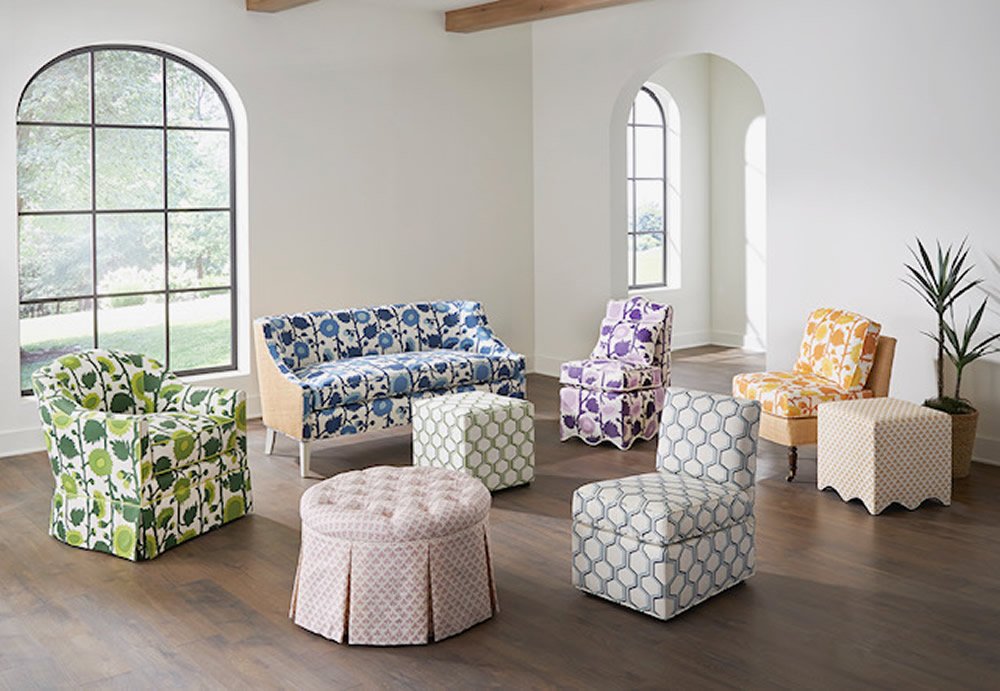
Natural lighting plays an important role in how fabric colors appear within an interior. A fabric that looks vibrant and warm in a showroom may appear softer, cooler, or noticeably different when introduced into a home.
The direction of sunlight, time of day, fabric texture, and surrounding interior colors can all influence how decorative fabrics are perceived. Understanding these factors can help homeowners and interior designers make more informed fabric selections and create beautifully coordinated spaces.
Fabric color is influenced by the type and intensity of light that reaches its surface. As natural lighting changes throughout the day, the appearance of decorative fabrics can change with it.
Bright sunlight may emphasize certain colors and details within a pattern, while indirect daylight can create a softer, more subdued appearance. Warm sunlight may enhance golden, red, and orange tones, while cooler daylight can emphasize blue and green undertones.
These visual changes do not necessarily indicate a difference in the fabric itself. Instead, they reflect how light interacts with its colors, fibers, and surface texture.
The direction a room faces can significantly affect the appearance of decorative fabrics. In the Northern Hemisphere, different window orientations generally produce the following lighting conditions:
North-facing rooms: Receive cooler, more consistent indirect daylight that can emphasize cool undertones.
South-facing rooms: Typically receive abundant natural light that can make fabric colors appear brighter and warmer.
East-facing rooms: Experience warm morning sunlight followed by cooler, more subdued lighting later in the day.
West-facing rooms: Receive warmer afternoon and evening sunlight that can enhance rich, golden tones.
Considering window orientation before selecting upholstery or drapery fabrics can help ensure that colors complement the room's natural lighting conditions.
Different fabric textures interact with natural light in different ways. Smooth fabrics may reflect more light, creating a brighter appearance, while textured fabrics can produce subtle shadows that add visual depth.
Natural fibers such as linen can feature slight surface irregularities that become more noticeable under direct sunlight. These characteristics can enhance the richness and individuality of decorative textiles.
The relationship between texture and lighting is particularly important when selecting fabrics for large upholstered surfaces, curtains, and other prominent furnishings.
Natural lighting can influence not only fabric colors but also the appearance of decorative patterns.
Bright daylight may highlight intricate details within botanical prints, geometric designs, and traditional floral patterns. In softer lighting, subtle differences between colors may become less pronounced, creating a more understated appearance.
High-contrast patterns generally remain visually distinctive under a wider range of lighting conditions, while tonal patterns may appear more subtle in rooms with limited natural light.
When choosing patterned fabrics, consider how both the individual colors and the overall design will appear throughout the day.
Natural light can reflect off walls, flooring, furniture, and other decorative surfaces, influencing how nearby fabrics appear.
For example, warm wood flooring may contribute a subtle golden cast to surrounding textiles, while cool-colored walls may emphasize blue or gray undertones.
This is why fabric samples should be evaluated alongside other materials within the intended space. A coordinated interior depends on how colors interact under actual lighting conditions rather than how they appear individually.
Although natural lighting can enhance the beauty of decorative fabrics, prolonged exposure to direct sunlight can contribute to fading and fiber deterioration over time.
The extent of fading depends on several factors, including fiber composition, dyes, colorfastness, and the intensity and duration of sunlight exposure.
Appropriate drapery lining, UV-filtering window treatments, and thoughtful furniture placement can help reduce unnecessary sun exposure and preserve the appearance of decorative fabrics.
One of the most effective ways to choose decorative fabrics is to observe samples in the room where they will be used.
Examine fabric samples during the morning, afternoon, and evening to understand how their colors respond to changing lighting conditions. It is also helpful to view samples in their intended orientation, whether vertically for drapery or horizontally for certain upholstered surfaces.
Evaluating fabrics under both natural and artificial lighting can help prevent unexpected color differences and ensure that the finished interior feels cohesive.
Understanding how natural lighting affects fabric colors is an essential part of thoughtful interior design. By considering window orientation, fabric texture, pattern contrast, and surrounding colors, you can select decorative textiles that complement the unique lighting conditions of your home.
At Quadrille Fabrics, we design and manufacture distinctive decorative fabrics featuring sophisticated color palettes, beautiful patterns, and timeless design influences. Our collections offer endless possibilities for creating elegant, visually engaging interiors.
Explore our decorative fabric collections at quadrillefabrics.com.