



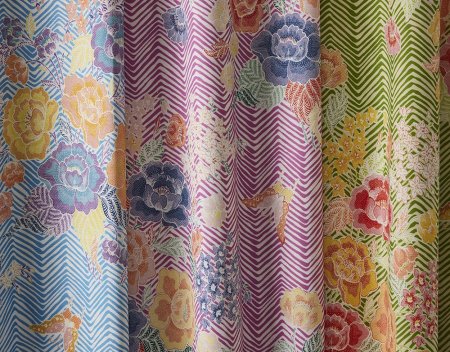
Mixing fabric and wallpaper patterns is one of the most powerful tools in interior design—and one of the most intimidating. Done well, pattern mixing creates rooms that feel layered, collected, and timeless. Done poorly, it can feel chaotic or overwhelming.
The good news? Pattern mixing follows clear, learnable principles. Interior designers rely on these same guidelines when pairing luxury fabrics and wallpapers in both classic and contemporary spaces. Below is a step-by-step guide to mixing patterns with confidence, whether you’re decorating a single room or an entire home.
Every successful room begins with a hero pattern. This is usually the boldest or most visually dominant element—often the wallpaper, but sometimes a large-scale fabric on upholstery or drapery.
Ask yourself:
Which pattern do I want to notice first?
Is the room meant to feel dramatic or restrained?
Once the lead pattern is chosen, all other fabrics should support it rather than compete with it.
Pro tip: Large-scale prints work especially well as wallpapers or statement upholstery because they anchor the space.
One of the most important rules of mixing fabric and wallpaper patterns is scale contrast.
A well-balanced room often includes:
Large-scale pattern (wallpaper or main upholstery)
Medium-scale pattern (chairs, curtains, or accent walls)
Small-scale pattern (pillows, trims, or secondary textiles)
Avoid using multiple patterns of the same size—they tend to clash because the eye can’t prioritize one over another.
Color harmony is what makes mixed patterns feel intentional.
To create cohesion:
Choose patterns that share at least one or two common colors
Limit your palette to 3–5 core colors
Use neutrals (ivory, linen, soft gray) as visual breathing room
This approach allows you to mix florals, geometrics, stripes, and pictorial designs without visual overload.
Great interiors don’t rely on one type of pattern alone. Designers often mix:
Organic patterns (florals, botanicals, animal motifs)
Geometric patterns (trellis, checks, stripes)
Textural patterns (woven solids, grasscloth-inspired designs)
For example, a flowing floral wallpaper pairs beautifully with a crisp stripe fabric or a subtle geometric upholstery.
Not every surface should shout for attention. Strong patterns need resting points.
In practice, this means:
Pair bold wallpaper with simpler upholstery
Offset patterned furniture with solid or lightly textured walls
Use quieter fabrics on large pieces and save bold prints for accents
This balance keeps rooms livable and timeless rather than trend-driven.
Pattern direction matters more than many people realize.
Vertical stripes emphasize height
Horizontal motifs can widen a room
Dense repeats feel more formal
Open repeats feel relaxed and airy
When mixing fabric and wallpaper, ensure their repeats don’t visually “fight” each other. One dense pattern paired with one open pattern often works better than two dense designs together.
Pattern mixing can also help zone a room.
For example:
Wallpaper defines a dining area
Upholstered seating introduces a secondary fabric pattern
Window treatments bridge the two with a coordinating design
This approach works especially well in open-plan spaces and classic New York interiors.
Even the most experienced designers never rely on imagination alone.
Before committing:
View fabric and wallpaper samples side by side
Check them in natural and artificial light
Look at them from across the room, not just up close
Sampling ensures color accuracy, scale compatibility, and overall harmony.
Trends come and go, but well-mixed patterns endure. The most enduring interiors rely on:
Strong scale contrast
Thoughtful color control
A mix of pattern types
Respect for negative space
When these fundamentals are in place, even bold combinations feel effortless.
Mixing fabric and wallpaper patterns is both an art and a discipline. With the right balance of scale, color, and contrast, pattern layering adds depth, character, and longevity to an interior.
At Quadrille Fabrics, pattern has always been central to timeless design. Whether you’re working with classic motifs or bold modern interpretations, thoughtful pattern mixing transforms spaces from decorated to truly designed.
If you’d like help selecting or pairing fabrics and wallpapers for your project, our team is always happy to guide you through the process.