



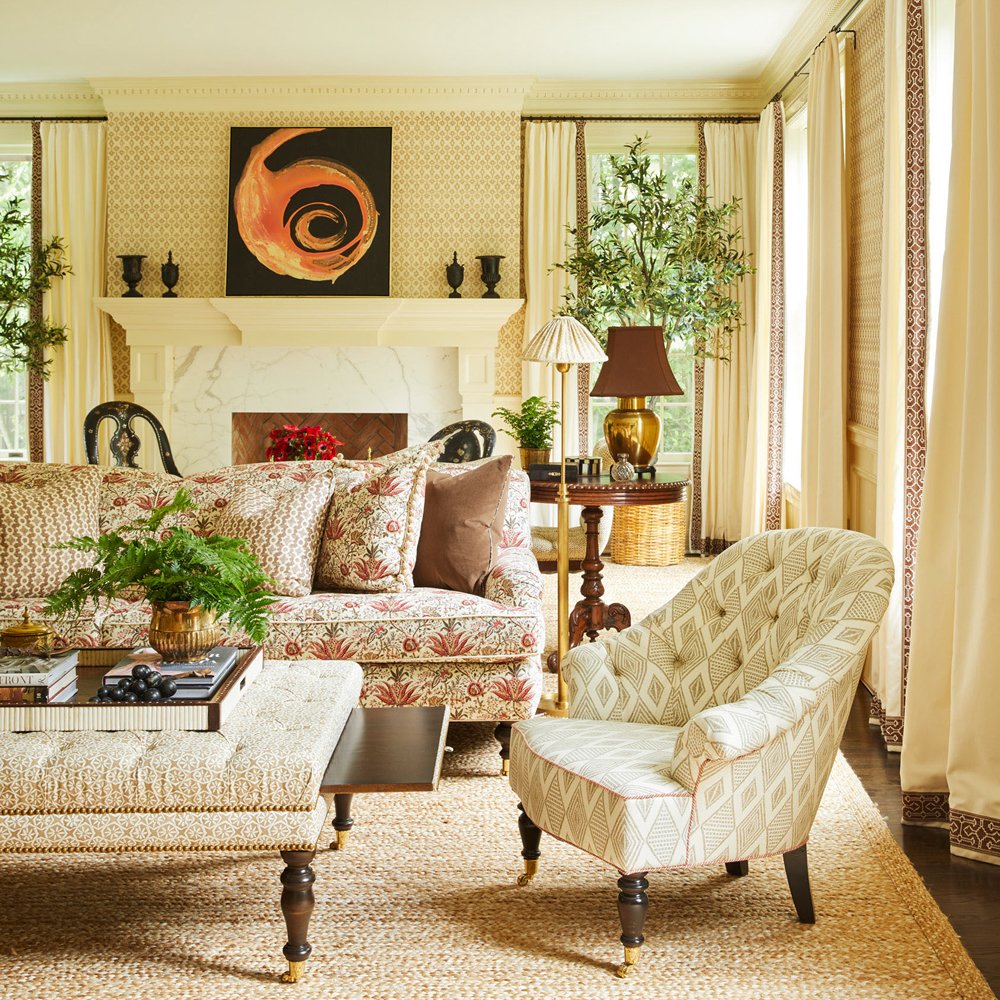
Mixing large and small fabric patterns is an effective way to create a visually interesting, sophisticated, and cohesive interior. Whether you are selecting fabrics for upholstery, curtains, decorative pillows, or other furnishings, combining different pattern scales can add depth, personality, and character to a space.
The key to successfully mixing fabric patterns is understanding how scale, color, and placement work together.
Pattern scale refers to the size of the individual design elements within a fabric. Large-scale patterns typically feature oversized florals, expansive botanical motifs, or bold geometric shapes. Small-scale patterns often incorporate delicate florals, miniature geometric designs, or closely spaced decorative motifs.
Large-scale patterns naturally attract attention, while smaller patterns can provide subtle visual interest without competing with more prominent designs. Combining the two creates contrast and helps establish visual balance throughout a room.
One of the easiest ways to mix fabric patterns is to begin with a large-scale statement fabric. This fabric can establish the overall color palette and decorative direction of the space.
Large-scale patterns work particularly well on:
Sofas and upholstered headboards
Full-length curtains and drapery
Accent chairs
Decorative bed coverings
Large upholstered ottomans
Once you have selected your statement fabric, choose smaller patterns that complement its colors and overall aesthetic.
Color is one of the most important elements when combining different fabric patterns. Even patterns with dramatically different designs can work beautifully together when they share complementary colors.
For example, a large blue and white botanical print can be paired with a small blue geometric pattern or a delicate floral design featuring similar tones.
The fabrics do not need to match perfectly. Repeating one or two colors throughout the room can create a sense of continuity while allowing each pattern to maintain its individual character.
Mixing different pattern styles can prevent an interior from feeling repetitive. Rather than combining several similar floral designs, consider pairing organic patterns with more structured motifs.
Popular fabric pattern combinations include:
Large botanical prints with small geometric patterns
Oversized florals with narrow stripes
Bold ikat designs with delicate repeating motifs
Large chinoiserie patterns with small trellis designs
Expansive tropical prints with subtle dotted patterns
The contrast between organic and structured designs can make an interior feel more layered and thoughtfully composed.
Although large and small patterns can work beautifully together, introducing a medium-scale fabric can help bridge the visual gap between them.
A large floral curtain fabric, a medium-scale geometric upholstery fabric, and small-patterned decorative pillows can create a balanced arrangement in which each design contributes something different.
Varying pattern sizes also helps prevent individual fabrics from competing for attention.
The size and shape of furniture can influence how a fabric pattern appears. Large-scale designs often benefit from expansive surfaces that allow their motifs to be fully appreciated. Smaller patterns can be particularly effective on compact furnishings and decorative accessories.
However, these are not strict rules. A bold, oversized pattern on a small accent chair can create a striking focal point, while a small repeating pattern on a large sofa can provide an understated foundation.
Consider how the fabric will look once it is cut, sewn, and applied to the finished furnishing.
Not every fabric in a room needs to feature a pattern. Solid-colored fabrics and subtle textures provide visual breathing room between more decorative elements.
Natural linen textures, understated woven fabrics, and complementary solid colors can soften the contrast between large and small patterns while maintaining a sophisticated appearance.
This approach is particularly useful in interiors that incorporate multiple patterned furnishings.
Before making a final selection, arrange your fabric samples alongside one another. Viewing fabrics together allows you to evaluate their colors, textures, and pattern scales more accurately.
It is also helpful to examine samples under both natural and artificial lighting. When considering large-scale designs, review an image of the full pattern repeat, as a small swatch may not capture the complete design.
Successfully mixing large and small fabric patterns is about creating harmony through contrast. By varying pattern scales, coordinating colors, and thoughtfully selecting fabric placements, you can create interiors that feel distinctive, elegant, and timeless.
At Quadrille Fabrics, we design and manufacture decorative fabrics featuring distinctive patterns, sophisticated color palettes, and timeless design influences. From bold statement prints to understated repeating motifs, our collections offer countless opportunities to create beautifully layered interiors.
Explore our decorative fabric collections at quadrillefabrics.com.