



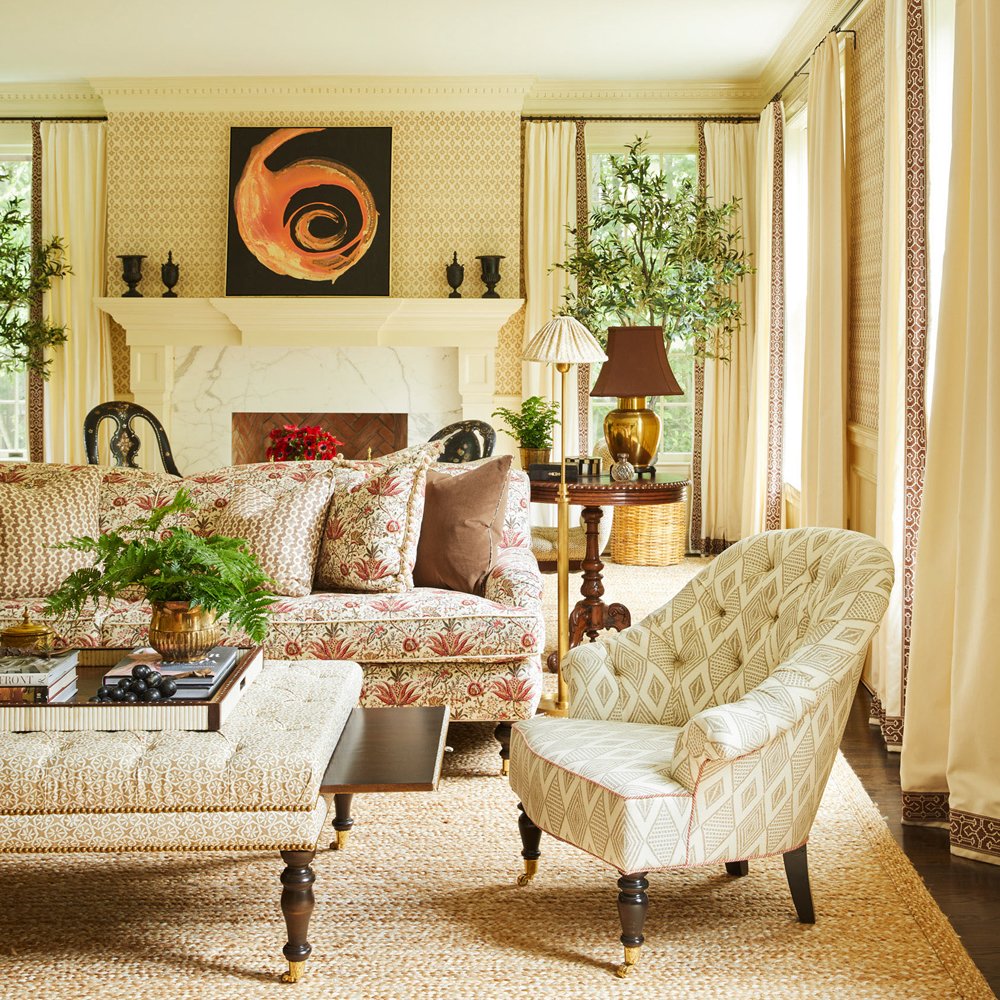
Choosing coordinating fabrics is one of the most rewarding parts of designing a beautiful interior. Whether you're furnishing a single room or an entire home, the right combination of colors, patterns, and textures creates a space that feels intentional, balanced, and inviting.
Many people assume coordinating fabrics means everything has to match perfectly, but professional interior designers often take a different approach. Instead of matching, they focus on creating harmony through complementary colors, varied textures, and thoughtfully scaled patterns.
Here's how to select coordinating fabrics that bring your design together.
Every successful fabric scheme begins with a focal point. This is usually the largest or most visually prominent textile in the room.
Your primary fabric might be used on:
Once you've selected this fabric, it becomes the foundation for every other textile in the space.
Rather than introducing dozens of unrelated colors, choose a palette of three to five complementary shades.
Look for secondary fabrics that repeat one or more colors found in your main fabric. This simple technique creates visual continuity throughout the room.
For example:
Repeating colors in different ways helps the room feel connected without appearing overly coordinated.
One of the biggest mistakes people make is choosing several fabrics with patterns that are all the same scale.
Instead, vary their size.
A balanced combination often includes:
This creates movement and prevents fabrics from competing for attention.
If your main fabric features an eye-catching floral, stripe, or geometric print, balance it with quieter companion fabrics.
Solid linens, textured weaves, or subtle tone-on-tone patterns allow bold prints to stand out while keeping the room comfortable and elegant.
The goal is visual interest—not visual clutter.
Texture is just as important as color and pattern.
Even when fabrics share similar colors, combining different materials adds richness and depth.
Consider mixing:
Layering textures creates a more sophisticated, designer-inspired look.
Coordinating fabrics should also suit how the room is used.
For busy family rooms, durable upholstery fabrics paired with washable accent textiles are practical choices.
Formal living rooms may allow for more delicate decorative fabrics, while bedrooms often benefit from softer textures that promote comfort and relaxation.
Function should always complement style.
Professional designers rarely use a beautiful fabric only once.
Instead, they repeat it thoughtfully.
For example:
Repeating fabrics in different applications creates a sense of rhythm and unity throughout the room.
Coordinating fabrics doesn't mean everything should blend together.
Contrast helps highlight individual pieces and prevents a room from feeling flat.
Pairing smooth fabrics with textured weaves, light colors with deeper tones, or traditional prints with subtle modern textures can create a more dynamic and inviting design.
The key is ensuring every fabric still relates back to the overall color palette.
Fabric can look dramatically different depending on lighting, surrounding furniture, and wall colors.
Before making a final decision, compare samples together in the actual room throughout the day.
Viewing fabrics under natural and artificial light helps ensure the colors and textures work well together in your unique space.
Your coordinating fabrics should support the design style you're trying to achieve.
For example:
Selecting fabrics that complement the room's overall aesthetic creates a polished, cohesive result.
Beautiful coordination starts with beautiful materials.
High-quality fabrics offer richer colors, more refined textures, and better long-term performance. They maintain their appearance over time, allowing carefully planned interiors to continue looking elegant for years.
Investing in well-crafted designer fabrics also gives you a wider selection of patterns, colors, and textures, making it easier to build a truly customized interior.
Selecting coordinating fabrics is about creating balance rather than perfect matching. By starting with a focal fabric, building a cohesive color palette, mixing pattern scales, layering textures, and repeating elements throughout the room, you can create interiors that feel thoughtfully designed and effortlessly inviting.
Whether you're updating a single piece of furniture or designing an entire home, carefully coordinated fabrics add personality, comfort, and lasting style. Taking the time to compare samples, consider durability, and invest in quality materials will help ensure your finished space looks beautiful for years to come.