



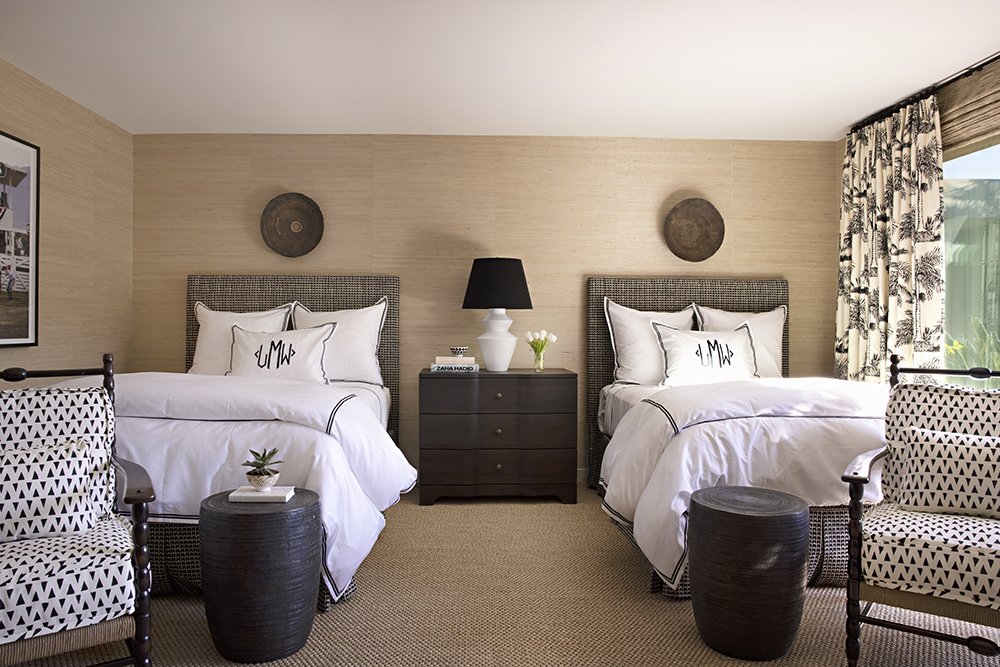
Animal prints have long held a distinctive place in interior design. From elegant leopard patterns to bold zebra stripes, these nature-inspired designs bring texture, personality, and visual interest to a space. While animal prints are often associated with dramatic interiors, they can also be surprisingly versatile, complementing everything from traditional decorating schemes to contemporary luxury homes.
When thoughtfully incorporated into a room, animal prints can function as sophisticated neutrals, striking focal points, or subtle decorative accents.
Understanding the different types of animal prints, their characteristics, and how they interact with other fabrics and patterns can help interior designers create balanced, visually engaging spaces.
Animal prints are decorative patterns inspired by the markings, textures, and appearances of animals. Common examples include leopard spots, zebra stripes, cheetah markings, tiger stripes, and snakeskin patterns.
In interior design, these motifs are reproduced on decorative fabrics, wallpaper, upholstery, rugs, and accessories.
Unlike actual animal hides, printed textiles offer a wide range of colours, scales, and artistic interpretations. Designers can incorporate traditional animal markings or experiment with contemporary versions featuring unexpected colour combinations.
Animal prints are particularly valued for their ability to introduce organic patterns into a room.
Because their shapes are often irregular, they can provide an appealing contrast to structured geometric designs, architectural lines, and solid-coloured furnishings.
Animal prints have remained popular in luxury interiors because they combine visual richness with decorative versatility.
Their association with glamour, exoticism, and sophisticated interiors has evolved over time, allowing them to appear in numerous design styles.
Animal prints introduce movement and variation through their distinctive markings.
Even when rendered in neutral colours, these patterns can make an otherwise simple interior feel more layered and intentional.
A leopard-print accent chair can look beautiful in a traditional living room, while zebra-patterned cushions may provide a striking contrast in a contemporary space.
Animal prints can also complement maximalist, eclectic, Hollywood Regency, and transitional interiors.
Unlike perfectly symmetrical geometric patterns, animal-inspired markings frequently feature irregular shapes and spacing.
This organic quality can soften rooms dominated by straight lines and structured furniture.
Certain animal prints, particularly those featuring black, brown, beige, cream, and tan, can function similarly to neutral decorative patterns.
A small-scale leopard print, for example, may coordinate with floral upholstery, striped curtains, and solid-coloured furnishings without becoming the room's primary focal point.
Different animal prints create different visual effects. Understanding their characteristics can help determine which patterns are most appropriate for a particular interior.
Leopard print is among the most recognizable animal-inspired patterns.
Its irregular rosette markings create a distinctive combination of texture and movement.
Traditional leopard prints often feature warm shades of brown, tan, cream, and black, although contemporary interpretations may incorporate brighter colours.
Best applications include:
Upholstered accent chairs
Decorative cushions
Ottomans and benches
Wallpaper accents
Upholstered headboards
Leopard print can be especially effective when paired with traditional floral fabrics or understated geometric patterns.
Zebra print is characterized by its bold, irregular stripes.
The contrast between light and dark markings makes it particularly striking in interiors.
Traditional black-and-white zebra patterns can create a graphic appearance, while softer interpretations in beige, grey, or muted colours may feel more understated.
Zebra print works particularly well in spaces where designers want to introduce movement without adding numerous colours.
Although leopard and cheetah prints are sometimes confused, their markings are different.
Cheetah prints typically feature smaller, solid spots, while leopard prints are commonly represented by larger rosette-shaped markings.
Cheetah-inspired patterns can create a more delicate, evenly distributed visual texture.
They are particularly effective on smaller upholstered furnishings and decorative accessories.
Tiger prints feature distinctive stripes inspired by the markings of wild tigers.
These patterns often create a dramatic, directional appearance.
Traditional orange-and-black combinations make a bold statement, while monochromatic or muted interpretations can offer a more restrained aesthetic.
Tiger-inspired designs can be particularly effective on statement furniture or decorative wall coverings.
Snakeskin patterns are inspired by the intricate scales and markings of snakes.
Unlike larger animal prints, snakeskin designs often feature smaller, repeating details.
These patterns can introduce subtle texture and visual complexity.
Snakeskin-inspired prints are frequently associated with contemporary and glamorous interiors, particularly when rendered in neutral or metallic-inspired colour palettes.
The key to using animal prints successfully is understanding how they interact with the surrounding space.
A carefully selected animal print can enhance a room without overwhelming its overall design.
One of the simplest ways to introduce animal prints is through a single prominent furnishing.
An upholstered accent chair, ottoman, or bench can establish a decorative focal point.
For example, a leopard-print chair positioned beside a neutral sofa can introduce warmth and visual interest without requiring extensive changes to the room.
This approach works particularly well in interiors that already feature a restrained colour palette.
Animal prints do not need to dominate a room.
Smaller accessories, such as cushions, upholstered stools, or decorative fabric panels, can introduce pattern in a more subtle way.
A pair of animal-print cushions may provide enough contrast to make a neutral sofa feel more dynamic.
This approach also allows homeowners to experiment with animal-inspired patterns before incorporating them into larger design elements.
Solid-coloured fabrics can help balance the visual complexity of animal prints.
For example, a bold zebra-patterned chair may look particularly striking against deep blue, cream, or charcoal upholstery.
Similarly, leopard prints can complement warm neutrals, rich greens, and earthy tones.
Repeating one or two colours throughout the room helps create a cohesive design.
Animal prints do not need to replicate natural animal markings.
Contemporary textile designers often reinterpret these patterns using unexpected colours.
A blue-and-white animal print may complement a coastal-inspired interior, while a green or coral interpretation can introduce a playful element into a traditional space.
Creative colour combinations allow animal prints to feel fresh and distinctive.
One of the most interesting aspects of animal prints is their ability to coordinate with other decorative patterns.
When thoughtfully combined, animal prints can contribute to richly layered interiors.
Floral patterns and animal prints can create an appealing contrast between organic shapes.
A large-scale floral fabric may coordinate beautifully with a smaller leopard or cheetah print.
The key is to establish a shared colour palette while varying the scale of the patterns.
For example, a colourful floral sofa might be complemented by small-scale animal-print cushions in coordinating tones.
Stripes provide structure, while animal prints introduce irregular movement.
This combination can create a balanced and visually engaging interior.
A striped sofa paired with an animal-print ottoman, for instance, can feel both tailored and expressive.
Geometric fabrics feature structured shapes and repeating arrangements.
Animal prints provide a contrasting organic element.
Combining the two can help prevent an interior from feeling overly rigid or predictable.
Multiple animal prints can work together, particularly in eclectic or maximalist interiors.
However, this approach requires careful attention to colour, scale, and placement.
For example, a small leopard pattern may complement a larger zebra design when both share a restrained neutral palette.
Allowing one print to dominate while the other plays a supporting role can help maintain visual balance.
Pattern scale is an important consideration when selecting animal-print fabrics or wallpaper.
Large-scale prints create a stronger visual impact, while smaller patterns often provide more subtle texture.
Smaller animal markings can be particularly versatile.
They may work well on decorative cushions, dining chairs, ottomans, and other upholstered furnishings.
From a distance, some small-scale animal prints can appear almost textured rather than distinctly patterned.
Oversized animal markings can create a dramatic statement.
These patterns may be especially effective on accent chairs, large upholstered panels, or feature walls.
When selecting a large-scale print, consider how the pattern will be positioned across seams, cushions, and furniture edges.
The dimensions and shape of furniture can influence how an animal print appears.
A small chair upholstered in an oversized pattern may display only a portion of the overall design.
Conversely, a tiny repeating pattern may become less noticeable on a large sofa.
Reviewing fabric samples and considering pattern placement can help achieve the desired effect.
Animal prints are not limited to one decorative aesthetic.
Their versatility allows them to complement a variety of interior styles.
In traditional interiors, animal prints can introduce contrast alongside floral fabrics, antique furniture, and classic architectural details.
Warm-toned leopard prints are particularly effective in rooms featuring rich woods, decorative trim, and layered textiles.
Contemporary spaces often benefit from the graphic qualities of animal prints.
Black-and-white zebra patterns, for example, can provide a striking accent against minimalist furnishings and clean architectural lines.
Hollywood Regency design embraces glamour, contrast, and expressive decorative elements.
Animal prints fit naturally into this aesthetic, particularly when paired with luxurious upholstery, mirrored furnishings, and metallic accents.
Maximalist spaces celebrate layered colours, textures, and patterns.
Animal prints can contribute to this visual richness when combined with florals, geometric designs, and decorative wallpaper.
The goal is to create an intentional composition rather than an uncontrolled mixture of patterns.
Transitional design combines traditional and contemporary influences.
Animal prints can help bridge these styles by introducing classic decorative motifs in fresh colours or modern applications.
Animal-inspired patterns can also create beautiful decorative wall treatments.
Wallpaper offers an opportunity to incorporate animal markings on a larger scale.
A subtle leopard-inspired wallpaper may introduce texture into a powder room, while a bold zebra design can create a dramatic feature wall.
When choosing animal-print wallpaper, consider the room's dimensions, lighting, and existing furnishings.
A large-scale print may become the dominant decorative element, while a smaller repeating design can function as a textured backdrop.
Coordinating the wallpaper with upholstery and curtains helps establish a cohesive interior.
When selecting animal-print fabric for furniture, appearance is only one consideration.
The textile must also be appropriate for the intended application.
Important factors include:
Fabric durability: Consider abrasion resistance and the expected level of use.
Fiber composition: Different fibers offer different textures, maintenance requirements, and performance characteristics.
Pattern scale: Ensure the design complements the furniture's dimensions.
Pattern direction: Some animal prints require careful orientation during cutting and upholstery.
Colour coordination: Select tones that complement the surrounding interior.
Cleaning requirements: Review the manufacturer's recommended care instructions.
For heavily used furniture, choosing a fabric specifically suitable for upholstery is particularly important.
Although animal prints are versatile, several design mistakes can affect the finished result.
Using too many competing patterns: Multiple bold prints can overwhelm a room when they lack a clear visual hierarchy.
Ignoring pattern scale: A print that looks beautiful on a small sample may appear very different across a large upholstered surface.
Forgetting colour coordination: Even contrasting patterns benefit from a shared or complementary colour palette.
Overusing animal prints: Repeating the same dramatic pattern across too many surfaces can reduce its impact.
Choosing fabric based on appearance alone: Upholstery fabrics should also be evaluated for durability, construction, and maintenance requirements.
Avoiding these mistakes can help create interiors that feel sophisticated rather than excessively decorated.
Animal prints have appeared in decorative interiors for generations, making them more enduring than many short-lived design trends.
However, their popularity and interpretation change over time.
Traditional leopard and zebra patterns remain recognizable, while contemporary designers continue to experiment with colour, scale, and abstraction.
The longevity of an animal-print interior often depends on how thoughtfully the pattern is incorporated.
A carefully selected animal-print accent can remain relevant even as surrounding furnishings and decorative accessories change.
At Quadrille, distinctive patterns, expressive colour palettes, and sophisticated textile designs help bring personality to interior spaces.
Whether you're creating a traditional living room, a colourful contemporary interior, or a richly layered decorative scheme, understanding how different patterns work together is essential.
Animal-inspired motifs can complement floral, geometric, and other decorative fabrics, offering opportunities to create interiors with depth and visual interest.
Explore the fabric and wallpaper collections at Quadrille Fabrics to discover inspiration for your next interior design project.
Animal prints offer a distinctive combination of texture, movement, and decorative versatility.
From classic leopard spots to dramatic zebra stripes, these patterns can introduce sophistication and personality into luxury interiors.
The key to incorporating animal prints successfully is balancing pattern scale, colour, texture, and placement.
Whether used on a statement chair, decorative cushions, wallpaper, or other upholstered furnishings, animal prints can enhance a wide range of interior design styles.
With thoughtful selection and coordination, animal-inspired patterns can become a timeless and elegant part of a beautifully designed space.