



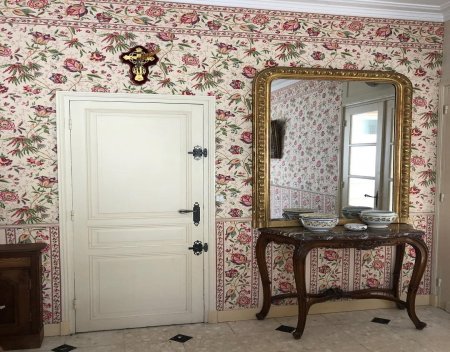
Wallpaper is one of the most expressive elements in interior design—but it also comes with its own vocabulary. Understanding wallpaper terminology helps homeowners, decorators, and designers make informed decisions about pattern, scale, installation, and long-term performance.
This guide explains the most common wallpaper terms you’ll encounter when selecting luxury wallpaper, whether you’re planning a single room or a whole home.
Repeat refers to the vertical distance before a wallpaper pattern begins again.
Straight repeat: The pattern aligns horizontally across each strip
Half-drop repeat: Each strip is offset halfway down, creating a staggered look
Random repeat: No predictable repetition, often found in textures
Repeat size affects how much wallpaper is required and how visually busy a wall will feel.
Pattern match describes how wallpaper panels align at the seams.
Straight match: Motifs line up evenly across strips
Drop match: Motifs shift vertically from strip to strip
No match: Alignment is not required
More complex matches typically require additional wallpaper to allow for proper alignment during installation.
Scale refers to the size of the motifs within the wallpaper.
Large-scale patterns make bold statements and add drama
Medium-scale patterns feel versatile and balanced
Small-scale patterns read as subtle texture from a distance
Scale should always be considered in relation to room size, ceiling height, and adjacent fabrics.
The ground is the background color or field on which the pattern is printed. A light ground reflects more light and feels airy, while a dark ground adds depth and intimacy.
Ground color plays a major role in how saturated or dramatic the overall wallpaper appears.
A colorway is a specific color combination in which a wallpaper design is produced. One pattern may be offered in multiple colorways, each creating a different mood—from soft and traditional to bold and modern.
A motif is a single decorative element or unit within a wallpaper pattern. Motifs can be floral, geometric, pictorial, or abstract, and their repetition forms the overall design.
Hand-printed wallpaper is produced using screens or blocks applied by hand, often resulting in subtle variations that add depth and character.
Machine-printed wallpaper offers uniformity and precision, with less variation from roll to roll.
Hand-printing is often prized in luxury interiors for its artisanal quality.
A panel refers to a single printed width or drop of wallpaper. Panel width varies depending on the manufacturer and printing method.
Understanding panel size helps with layout planning and accurate yardage calculations.
Untrimmed wallpaper has excess paper along the edges that must be trimmed during installation.
Trimmed wallpaper arrives ready to hang with clean edges.
Luxury wallpapers are often untrimmed to allow for precise alignment during installation.
These terms describe installation methods:
Paste-the-paper: Adhesive is applied directly to the wallpaper
Paste-the-wall: Adhesive is applied to the wall surface
Your installer will determine the appropriate method based on paper type and backing.
Backing refers to the material behind the decorative surface. Common backings include paper, non-woven, and fabric-backed options. Backing affects durability, installation, and removal.
A lot refers to a production batch. Slight color variations can occur between lots, especially in hand-printed wallpapers. Ordering sufficient material from the same lot helps ensure consistency.
Wallpaper is often sold by yardage, but coverage depends on width, repeat, and pattern match. Yardage calculations ensure enough material is ordered for proper alignment and waste.
A border is a decorative strip used to frame wallpaper, define transitions, or accent architectural features. Borders can be used sparingly for a classic, tailored look.
Understanding wallpaper terminology makes the selection process clearer and more enjoyable. With this knowledge, you can evaluate patterns more confidently, communicate effectively with designers and installers, and achieve a polished result.
At Quadrille Fabrics, wallpaper is approached with craftsmanship, clarity, and timeless design in mind. If you have questions about terminology or selecting the right wallpaper for your project, our team is always happy to help guide you through the process.