



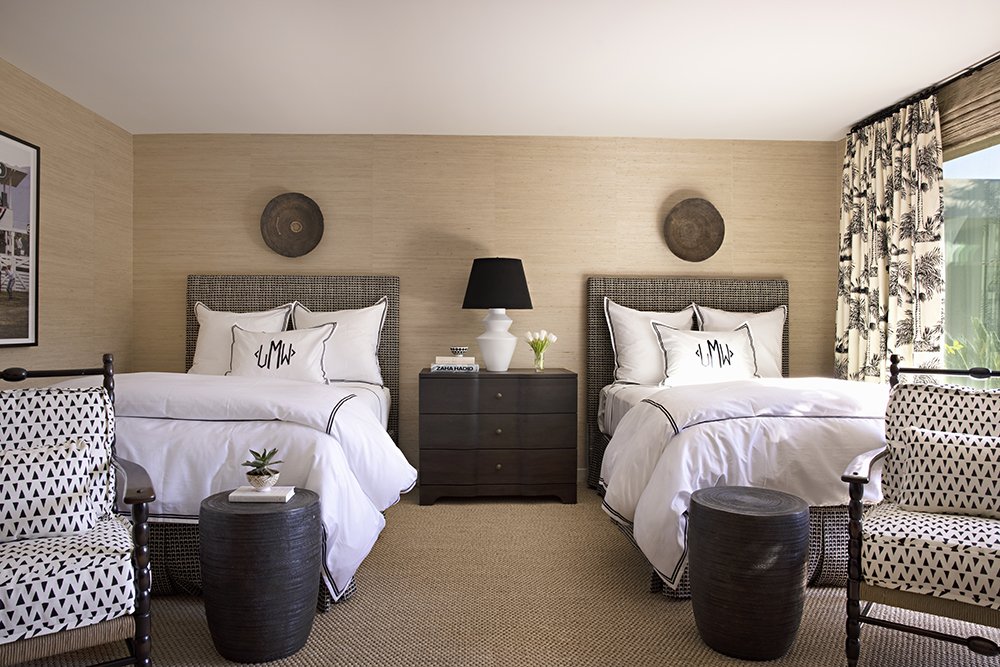
Colour is one of the most important elements of interior design. It influences the atmosphere of a room, connects different decorative elements, and helps establish a cohesive aesthetic. While fabric manufacturers offer a wide variety of colours and patterns, sometimes an interior design project requires a shade that isn't available in an existing collection.
This is where custom fabric colours come into play.
Custom fabric colours allow designers to explore specific shades, develop unique colour combinations, and coordinate textiles with the broader vision of an interior. Whether the goal is to match an existing upholstery fabric, create a distinctive colourway of a decorative pattern, or develop a textile for a particular project, custom colour development can offer greater creative flexibility.
But what exactly is a custom fabric colour, and how is it created?
In this guide, we'll explore the meaning of custom fabric colours, how textile manufacturers develop them, and what interior designers should consider when requesting custom-coloured fabrics.
A custom fabric colour is a specially developed or modified colour created to meet particular design requirements rather than relying exclusively on a manufacturer's existing standard colours.
Custom colour development may involve adjusting an existing shade, matching a specific colour reference, or creating an entirely new combination of colours for a textile.
For example, an interior designer might find a beautiful floral fabric but prefer its background in soft green rather than the blue offered in the standard collection.
If the manufacturer provides customization services, it may be possible to develop an alternative version of the pattern featuring the requested colour.
Custom fabric colours are particularly valuable in projects where precise colour coordination is important.
They may be used for residential interiors, hospitality spaces, commercial environments, and specialized decorative applications.
However, custom colour availability depends on the manufacturer's capabilities, the textile's construction, the printing or dyeing process, and production requirements.
Although the terms are related, fabric colour and fabric colourway describe slightly different concepts.
A fabric colour refers to an individual shade or hue present in a textile.
A fabric colourway refers to the complete combination of colours used in a particular fabric design.
For example, a botanical fabric might feature green leaves, blue flowers, and a cream background.
Together, these colours form one colourway.
The same pattern could also be produced with coral flowers, olive leaves, and a pale yellow background, creating a second colourway.
Custom colour development may involve changing a single colour within an existing design or developing an entirely new colourway.
This distinction is especially important when working with multicoloured decorative fabrics.
Custom fabric colours provide additional flexibility when creating interiors with specific aesthetic requirements.
While standard fabric collections offer many options, certain projects benefit from more precise colour coordination.
Interior designers often develop colour palettes that connect upholstery, curtains, wallpaper, flooring, and architectural finishes.
Occasionally, an otherwise suitable fabric may not be available in the exact shade required.
Custom colour development can help bring the textile closer to the intended palette.
For example, a designer working with a particular shade of blue may wish to incorporate that colour into a patterned upholstery fabric.
Custom-coloured textiles can help establish a unique visual identity.
Rather than relying exclusively on standard colourways, designers may develop combinations that reflect the character of a particular residence or commercial space.
This can be especially appealing in luxury interiors where individuality and careful material selection are priorities.
Fabric and wallpaper often play complementary roles in interior design.
A custom colourway may help coordinate a decorative fabric with an existing wallpaper pattern.
For example, a floral curtain fabric might be recoloured to incorporate shades already present in the room's wallpaper.
This can create a cohesive appearance without requiring the patterns to match exactly.
Some projects involve established colour standards or detailed design specifications.
Hotels, restaurants, and other commercial environments may require textiles that complement an existing interior concept.
Custom colour development can help address these requirements when suitable manufacturing options are available.
Developing a custom fabric colour involves several stages.
The exact process varies depending on the fabric, manufacturer, and production method.
However, many custom textile projects follow a similar sequence.
The process begins with a colour reference.
An interior designer may provide a physical fabric swatch, paint sample, standardized colour reference, or another approved material.
The reference helps communicate the desired shade to the textile manufacturer.
Physical samples are often especially valuable because colours displayed on computer screens can vary significantly between devices.
A clear reference reduces uncertainty during the development process.
Before developing a custom colour, the manufacturer must consider the textile itself.
Different fibers and fabric constructions respond differently to dyes, pigments, and printing processes.
For example, cotton, linen, silk, and synthetic fibers may require different colourants or processing conditions.
The texture and weave of a fabric can also influence how the finished colour appears.
A colour developed on smooth cotton may look different when applied to a textured linen base.
Once the desired colour and fabric characteristics have been established, the manufacturer can begin developing an appropriate colour formulation.
This may involve combining dyes or pigments in specific proportions.
The objective is to reproduce the requested shade as accurately as possible using a process compatible with the textile.
For printed patterns, the manufacturer may also need to consider how the new colour interacts with the other colours in the design.
Before full production, a sample is typically created to evaluate the proposed colour.
For dyed fabrics, this may involve a small-scale dyeing sample known as a lab dip.
For printed textiles, a strike-off may be produced to show how the adjusted colours appear within the pattern.
These samples allow designers to evaluate the colour on the intended material.
The designer compares the sample with the original reference.
If the colour is too warm, cool, light, dark, or saturated, further adjustments may be necessary.
Multiple sampling rounds may be required before the colour is approved.
Lighting conditions are especially important during this stage because colours can appear different under daylight and artificial lighting.
Once the desired colour has been achieved, the designer or client approves the sample.
This approved reference becomes an important standard for subsequent production and quality control.
After approval, the manufacturer can proceed with production according to the agreed specifications.
The fabric may undergo dyeing, printing, drying, finishing, and quality-control processes.
The exact manufacturing sequence depends on the textile and production method.
A lab dip is a small fabric sample dyed to evaluate a proposed colour before larger-scale production.
Lab dips are commonly used when developing colours for piece-dyed textiles.
They allow manufacturers and designers to assess how a particular dye formulation appears on the intended fabric.
Several variations may be produced to compare different shades.
For example, a designer requesting a muted green might receive samples with slightly different undertones or levels of saturation.
The preferred sample can then be selected for further development or approval.
Lab dips are particularly useful because the finished colour depends on more than the dye formula alone.
Fiber composition, fabric preparation, processing conditions, and finishing can all influence the result.
A strike-off is a test printing used to evaluate a textile design before full production.
Unlike a lab dip, which typically focuses on dyeing a fabric to a particular colour, a strike-off demonstrates how printed colours and patterns appear together.
Strike-offs are especially important when developing custom colourways for decorative fabrics.
For example, a designer may request changes to the background, floral motifs, and accent colours of an existing pattern.
A strike-off allows the designer to evaluate the complete composition.
This helps identify potential issues involving colour balance, printing accuracy, and pattern detail.
Not every fabric can be customized.
The feasibility of custom colour development depends on several technical and commercial factors.
Different fibers accept dyes and pigments differently.
A colour that can be achieved on cotton may require a different formulation on linen, silk, or polyester.
Some materials may also have limitations regarding particular shades or colour effects.
The manufacturing process influences customization possibilities.
Screen printing, digital printing, and other textile printing methods have different technical requirements.
For example, changing colours in a screen-printed pattern may require new colour formulations and sampling.
Digital printing may offer greater flexibility for certain complex designs, although material compatibility and production requirements still apply.
The weave, texture, and finishing of a textile can influence colour appearance.
A smooth fabric may display colour differently from a heavily textured material.
Not all textile manufacturers offer custom colours.
Some specialize in standard collections, while others provide custom dyeing, printing, or colourway development.
Before planning a project around a custom shade, designers should confirm the manufacturer's available services and technical requirements.
Fabric texture can significantly influence the appearance of a colour.
A smooth, tightly woven textile may reflect light differently from a textured or loosely woven material.
As a result, the same nominal colour may appear different across multiple fabrics.
For example, a pale blue printed on smooth cotton may appear relatively uniform, while the same colour on textured linen may have a more varied appearance.
Fabric thickness, yarn characteristics, and finishing treatments can also influence colour perception.
This is why evaluating custom colours on the actual intended fabric is preferable to relying exclusively on a digital colour reference.
Lighting is one of the most important considerations in textile colour selection.
A fabric that appears warm and vibrant in natural daylight may look cooler or more muted under artificial lighting.
This occurs because different light sources have different spectral characteristics.
The phenomenon known as metamerism can cause two colours that appear to match under one light source to look different under another.
For example, a custom-coloured fabric might closely match a painted wall in daylight but appear slightly different under warm evening lighting.
When approving custom fabric colours, designers should evaluate samples under lighting conditions representative of the finished interior.
This is especially important when coordinating fabrics with paint, wallpaper, and other materials.
Coordinating fabric and wallpaper can be challenging because the two materials may have different surfaces, finishes, and printing processes.
Even when similar colour formulations are used, the finished appearance may vary.
To achieve a cohesive result, designers should consider several factors.
Use physical samples: Compare actual fabric and wallpaper samples rather than relying on digital images.
Evaluate colours together: Place samples side by side under the lighting conditions expected in the room.
Consider texture: A textured textile may reflect light differently from a smooth wallpaper.
Allow for complementary shades: Exact colour matching is not always necessary. Closely related tones can create a sophisticated, layered appearance.
Review the overall design: Pattern scale, contrast, and colour distribution can influence how well the materials coordinate.
The objective is to create a visually harmonious interior, even when the materials are not perfectly identical in colour.
Custom-coloured fabrics can be particularly useful for upholstery projects.
A designer may wish to coordinate a sofa, accent chair, or upholstered headboard with a specific interior palette.
For example, a decorative chair might require a patterned fabric featuring a particular shade of green to complement nearby curtains.
However, colour customization does not change the fundamental performance requirements of upholstery.
The selected fabric should still meet appropriate standards for abrasion resistance, colourfastness, seam strength, and cleaning.
Custom colours should also be evaluated for their suitability under expected lighting and usage conditions.
Curtains and drapery provide another opportunity to incorporate custom-coloured textiles.
Because window treatments often cover large surfaces, their colour can strongly influence the overall atmosphere of a room.
Custom colour development may help coordinate drapery with upholstery, wallpaper, or architectural finishes.
However, several practical factors should be considered.
Curtains may be exposed to substantial natural light, making colourfastness particularly important.
Fabric weight, drapability, lining, and finishing can also influence how the finished colour appears.
A fabric viewed flat on a sample table may look different once it is gathered into folds and installed across a window.
For this reason, designers should consider both the approved colour sample and the intended window treatment construction.
The cost of custom fabric colour development varies depending on the project.
Several factors can influence pricing, including:
The type of fabric being customized.
The complexity of the requested colour.
The number of colours within a printed pattern.
The manufacturing technique.
The number of samples or revisions required.
The quantity of fabric being ordered.
Additional setup or production requirements.
Some manufacturers may charge sampling or development fees.
Others may incorporate certain development costs into the overall production order.
Because pricing structures vary, designers should request a detailed quotation before proceeding.
Many textile manufacturers establish minimum order quantities for custom-coloured fabrics.
A minimum order quantity, commonly abbreviated as MOQ, is the smallest quantity a manufacturer will produce or sell under a particular production arrangement.
Custom colour development may require specialized setup, sampling, dye preparation, or printing adjustments.
These requirements can make very small production runs less economical.
Minimum quantities vary according to the manufacturer, fabric type, printing process, and complexity of the project.
Designers should confirm the minimum order requirements before incorporating a custom-coloured textile into a project specification.
Custom fabric colour development generally involves additional steps compared with ordering an existing standard colourway.
The timeline may include colour evaluation, sample production, revisions, approval, manufacturing, and finishing.
A relatively straightforward colour adjustment may require less development than a complex multicoloured print.
Production schedules can also be affected by fabric availability, manufacturing capacity, and order quantity.
For projects with strict installation deadlines, designers should confirm both the sampling timeline and estimated production lead time.
Allowing sufficient time for revisions can help prevent delays later in the project.
Although both processes can produce custom colours, they involve different manufacturing techniques.
Custom dyeing generally involves applying colour to textile fibers, yarns, or fabric using a suitable dyeing process.
Piece dyeing, for example, colours fabric after it has been woven or knitted.
Custom dyeing is often associated with solid-coloured textiles, although dyed yarns and other processes can also create multicoloured effects.
Custom printing applies a design or colour arrangement to the textile using a printing process.
This allows manufacturers to create decorative patterns featuring multiple colours.
Custom printing is particularly relevant for floral, geometric, botanical, and other patterned fabrics.
The appropriate method depends on the desired appearance and textile construction.
Custom colour development can provide valuable creative flexibility, but it requires careful planning.
Before beginning a project, designers should consider the following questions:
Is customization available? Confirm whether the manufacturer offers custom colour development for the selected textile.
What colour reference is required? Ask whether the manufacturer prefers a physical swatch, standardized colour reference, or another specification.
What is the minimum order quantity? Ensure the required yardage aligns with production requirements.
Are sampling fees involved? Clarify the costs associated with lab dips, strike-offs, and revisions.
How many revisions are permitted? Understand the approval process before production begins.
What is the estimated lead time? Account for sampling, manufacturing, and delivery.
What performance requirements apply? Confirm that the finished fabric will be suitable for its intended use.
Will future orders match? Ask about dye-lot variation and the feasibility of reproducing the colour in subsequent production runs.
Addressing these questions early can make the development process more efficient.
Custom fabric colours can be worthwhile when a project requires a particularly specific aesthetic.
They offer opportunities to coordinate materials more precisely, develop distinctive decorative combinations, and create interiors with a strong visual identity.
However, customization is not necessary for every project.
Existing fabric collections often provide extensive colour options, and a carefully selected standard colourway may achieve the desired result without additional development time or expense.
The decision ultimately depends on the project's design requirements, budget, timeline, and the manufacturer's available capabilities.
For luxury interior design projects where colour coordination is especially important, custom development can provide meaningful creative advantages.
Sometimes. If the manufacturer offers custom colourway development, it may be possible to modify the background colour of an existing pattern. Availability depends on the fabric and printing process.
Some manufacturers offer colour-matching services using physical samples or standardized references. However, an exact visual match is not always achievable because fabrics and painted surfaces reflect light differently.
A custom colourway is a specially developed combination of colours used in a textile pattern. It may involve modifying an existing design or creating a new colour arrangement.
A strike-off allows designers to evaluate printed colours and pattern details before full production. It helps identify potential differences between the intended artwork and the finished textile.
Not necessarily. Small variations can occur between dye lots or printing runs. Manufacturers may use approved colour standards and quality-control procedures to manage these differences, but tolerances should be discussed in advance.
In some cases, manufacturers can develop coordinating colours for fabric and wallpaper. However, differences in materials and printing processes may affect how closely the finished colours match.
At Quadrille, distinctive patterns and expressive colour combinations play an important role in creating beautiful interiors.
From elegant florals and botanical motifs to sophisticated geometric patterns and classic stripes, decorative fabrics offer countless opportunities to establish a cohesive interior colour palette.
Understanding custom fabric colours and colourway development can help interior designers appreciate the creative and technical considerations involved in textile production.
Whether you're selecting upholstery for a statement chair, coordinating curtains with wallpaper, or planning a richly layered interior, thoughtful colour selection is essential.
Explore the fabric and wallpaper collections at Quadrille Fabrics to discover distinctive patterns and colour combinations for your next interior design project.
For projects requiring specialized colour development, consult the manufacturer directly to confirm available customization options, minimum quantities, and production requirements.
Custom fabric colours offer interior designers greater flexibility when developing distinctive and carefully coordinated spaces.
From adjusting a single shade to creating an entirely new colourway, custom colour development combines artistic decision-making with technical textile expertise.
The process may involve colour references, dye formulations, lab dips, strike-offs, sampling, and production approvals.
Although customization requires additional planning, it can provide valuable opportunities to achieve a specific design vision.
By understanding how custom fabric colours are created and what factors influence their appearance, designers and homeowners can make more informed decisions when selecting decorative textiles.
Ultimately, successful colour selection is about more than matching individual shades. It's about creating a harmonious relationship between fabrics, furnishings, wallpaper, and the surrounding interior.