



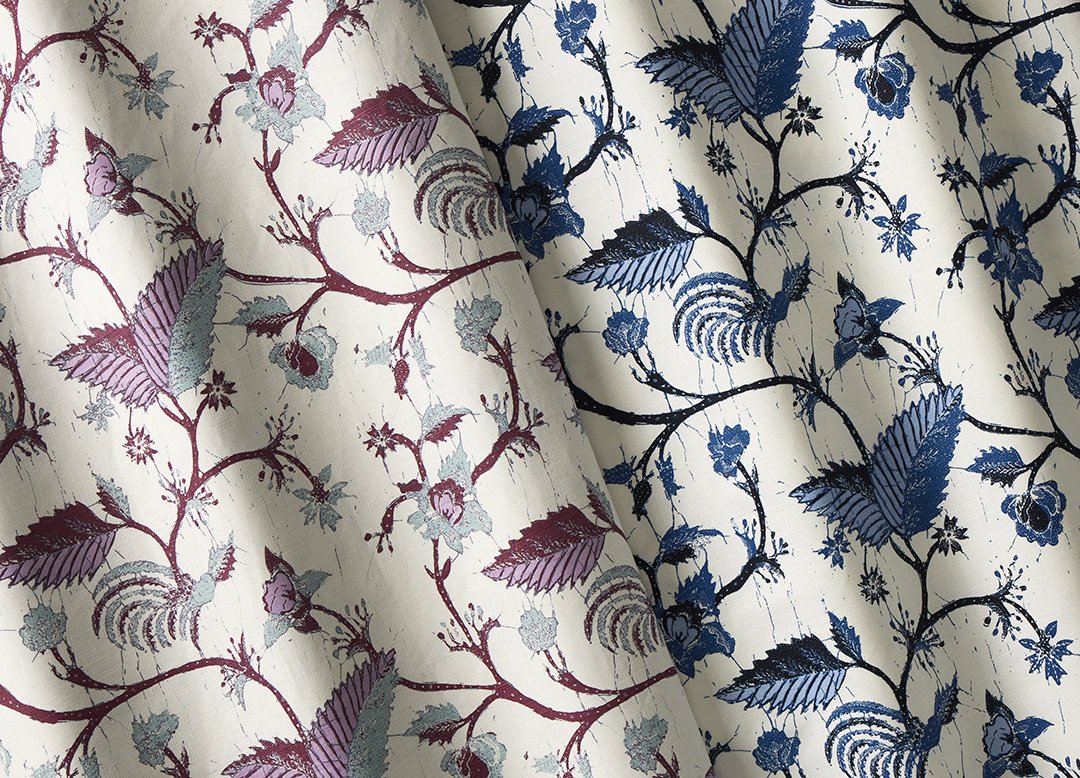
Shopping for designer fabric can be exciting, but it can also feel a little intimidating if you are unfamiliar with the terminology. Interior designers, workrooms, upholsterers, and fabric showrooms often use industry-specific language that homeowners may not hear every day.
Understanding a few key fabric terms can make the selection process much easier. Whether you are choosing fabric for curtains, upholstery, pillows, wallpaper coordination, or a full-room design scheme, knowing what these terms mean can help you make more confident decisions.
Here are the designer fabric terms every homeowner should know before starting a decorating project.
“Fabric by the yard” means fabric is sold in continuous yardage rather than as a finished product.
When you order fabric by the yard, the material can be used to create custom items such as drapery, pillows, upholstered furniture, cushions, headboards, or bedding accents.
The amount of yardage needed depends on the project, the size of the furniture or window, the fabric width, and the pattern repeat.
Fabric width refers to how wide the fabric is from one finished edge to the other.
Many decorative fabrics come in standard widths, often around 54 inches, although widths can vary.
Fabric width matters because it affects how much yardage you need. Wider fabric may cover more area with fewer seams, while narrower fabric may require additional yardage for certain projects.
Pattern repeat is one of the most important terms in designer fabric.
It refers to the distance before a pattern begins again. A fabric may have a small repeat, a large repeat, or no obvious repeat at all.
Pattern repeat affects both the appearance of the finished piece and the amount of fabric required.
For example, a large floral pattern may require extra yardage so the upholsterer or workroom can center the design properly on a chair, cushion, or curtain panel.
Vertical repeat measures how often the pattern repeats from top to bottom.
This is especially important for curtains, Roman shades, upholstered backs, and any application where the design runs vertically.
A large vertical repeat can create a beautiful dramatic effect, but it may also require additional fabric to align the pattern correctly.
Horizontal repeat measures how often the pattern repeats from side to side.
This matters when fabric is used across wider surfaces, such as sofas, benches, headboards, or multiple curtain panels.
Understanding the horizontal repeat helps ensure the pattern is placed evenly and attractively across the finished piece.
Railroaded fabric is designed so the pattern runs horizontally across the roll rather than vertically up the roll.
This can be useful for upholstery because it may allow a pattern to run continuously across a sofa or bench without unnecessary seams.
Not all fabrics are railroaded, so it is important to check the fabric specifications before ordering.
Ground cloth refers to the base fabric on which a pattern is printed or woven.
Common ground cloths include linen, cotton, cotton-linen blends, and other textile bases.
The ground cloth affects the fabric’s texture, drape, durability, and overall appearance. The same pattern can look and feel different depending on the ground cloth used.
A colorway is a specific color version of a fabric pattern.
For example, the same floral pattern may be available in blue and white, green and ivory, coral and cream, or navy and beige.
Choosing the right colorway allows you to adapt a pattern to the mood and palette of your room.
A custom colorway is a specially developed color version of a fabric pattern.
Interior designers may request custom colors to coordinate with wallpaper, paint, rugs, upholstery, or existing furnishings.
Custom colorways are especially useful when a standard color option is close but not quite right for the project.
A dye lot refers to a batch of fabric that was colored or printed at the same time.
Because slight variations can occur between production runs, fabric from one dye lot may look a little different from fabric produced later.
This is why designers often recommend ordering all the fabric needed for a project at once, especially for large installations like drapery or upholstery.
A memo sample is a small piece of fabric used for review before placing an order.
Samples allow homeowners and designers to see the true color, texture, scale, and quality of a fabric in person.
Because fabrics can look different online than they do in a room, reviewing samples is one of the most important steps in the selection process.
A cutting for approval, sometimes called a CFA, is a small cutting from the current fabric stock that is sent for review before the full order is shipped.
This allows the designer or homeowner to approve the actual color and quality of the available fabric before committing to the complete yardage.
A CFA can be especially helpful when color precision is important.
Hand screen-printed fabric is created using screens and skilled hand application rather than fully automated digital printing.
This process can create beautiful depth, character, and subtle variation.
Many homeowners appreciate hand screen-printed fabrics because they feel artisanal, distinctive, and less mass-produced than machine-made alternatives.
Variation refers to the natural differences that may appear in handmade or hand-printed fabrics.
These differences can include subtle shifts in color, texture, or print density.
In high-quality hand-crafted textiles, variation is often considered part of the beauty of the fabric rather than a flaw. It gives the material character and authenticity.
Upholstery fabric is fabric suitable for covering furniture such as chairs, sofas, benches, ottomans, and headboards.
Upholstery fabric typically needs to be durable enough for its intended use.
A formal accent chair may not require the same level of durability as a family room sofa, so it is important to match the fabric to the function of the piece.
Drapery fabric is fabric used for curtains or window treatments.
The best drapery fabrics have a pleasing drape, meaning they hang beautifully when made into panels.
Linen, cotton, and other decorative fabrics are commonly used for custom drapery depending on the desired look, weight, and level of formality.
Double rubs are used to measure fabric abrasion resistance.
This term is most often associated with upholstery fabrics. A higher double rub rating generally indicates that the fabric can withstand more wear.
While double rubs are useful, they are only one part of the decision. Texture, fiber content, weave, finish, and the intended use of the furniture also matter.
Martindale is another abrasion-testing method used to evaluate fabric durability.
Like double rubs, it helps indicate how a fabric may perform under repeated use.
Homeowners do not always need to know every technical detail, but understanding that these tests relate to durability can help when choosing upholstery fabric.
Fabric content refers to what the fabric is made from.
Common fabric contents include cotton, linen, silk, wool, polyester, viscose, and blends of multiple fibers.
Content affects the fabric’s texture, appearance, performance, and care requirements. For example, linen often has a natural, relaxed texture, while cotton can feel crisp and versatile.
A fabric finish is a treatment applied to the fabric after it is woven or printed.
Finishes may affect the fabric’s texture, sheen, stain resistance, durability, or hand.
Not every fabric has a special finish, but when it does, the finish can influence where and how the fabric should be used.
The “hand” of a fabric refers to how it feels when touched.
A fabric may have a soft hand, crisp hand, heavy hand, or smooth hand.
Designers often consider hand when choosing fabric for drapery, pillows, and upholstery because texture contributes to the overall comfort and feel of a room.
Drape describes how a fabric hangs.
Some fabrics fall softly and fluidly, while others are more structured.
Drape is especially important for curtains, Roman shades, bed skirts, and other applications where the fabric needs to hang gracefully.
Scale refers to the size of a pattern in relation to the room or furniture piece.
A large-scale pattern can look dramatic and elegant on curtains or a headboard, while a smaller-scale pattern may work beautifully for pillows, dining chair seats, or layered accents.
The best rooms often include a mix of large, medium, and small-scale patterns.
A coordinate is a fabric or wallpaper that is designed or selected to work well with another pattern.
For example, a floral fabric may coordinate with a stripe, geometric, or textured solid.
Using coordinates helps create a layered room that feels connected without being overly matched.
A workroom is a professional studio or business that turns fabric into finished custom pieces.
Workrooms may create curtains, Roman shades, pillows, cushions, bedding, slipcovers, and other soft furnishings.
Interior designers often work closely with workrooms to ensure fabric is cut, patterned, and finished properly.
COM stands for “customer’s own material.”
This term is often used in upholstery or custom furniture. It means the customer provides the fabric, rather than choosing from the furniture maker’s standard fabric options.
When using COM, it is important to confirm fabric requirements, yardage, durability, and suitability before ordering.
Yardage refers to the amount of fabric needed for a project.
The required yardage depends on the item being made, fabric width, pattern repeat, and whether pattern matching is needed.
Because mistakes can be costly, homeowners should work with a designer, upholsterer, or workroom to calculate yardage accurately.
Understanding designer fabric terminology helps homeowners make better decisions and communicate more clearly with design professionals.
These terms can help you:
Order the correct amount of fabric
Understand fabric quality
Compare options more confidently
Avoid common purchasing mistakes
Coordinate fabrics and wallpaper more effectively
Choose materials suited to the room’s function
A little knowledge can make the fabric selection process feel much less overwhelming.
Designer fabric brings color, texture, pattern, and personality into a home. Whether you are selecting fabric for curtains, upholstery, pillows, or a whole-room design scheme, understanding common fabric terms can help you feel more confident throughout the process.
From pattern repeat and colorway to ground cloth, memo samples, and yardage, each term plays a role in helping you choose the right fabric for your project.
With the right vocabulary and a thoughtful approach, selecting designer fabric becomes less confusing—and much more enjoyable.