



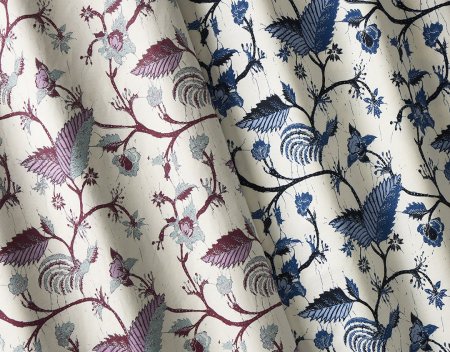
Choosing the right fabric for your home isn’t just about what looks good in a showroom—it’s about how that material lives, wears, and feels in your everyday life. Whether you’re reupholstering a sofa, selecting curtains, or adding decorative accents, the fabric you choose plays a huge role in both the style and functionality of your space.
At Quadrille Fabrics, the focus is on blending timeless design with practical performance. Here’s how to make the right fabric choice for your space—without second-guessing yourself later.
Before you even think about color or pattern, take a step back and ask: What actually happens in this room?
A formal living room that rarely gets used can handle more delicate, luxurious fabrics. On the other hand, a family room with kids, pets, and constant activity demands something far more durable.
High-traffic areas benefit from fabrics that resist wear and are easy to clean, while low-traffic spaces give you more freedom to prioritize aesthetics over durability. Being honest about how you use your space is the foundation of a smart fabric decision.
Not all fabrics are created equal, especially when it comes to longevity. Durability often comes down to fiber type and weave.
Tightly woven fabrics tend to last longer and resist damage better than loosely woven ones. Synthetic fibers like polyester blends are typically more resilient, while natural fibers like cotton and linen offer beauty but may require more care.
If you’re choosing upholstery fabric, durability should be one of your top priorities. A stunning fabric won’t feel so stunning if it starts to wear out within a year.
Some fabrics are low-maintenance. Others… not so much.
If you want something easy to live with, look for fabrics that are stain-resistant or easy to clean. This is especially important for households with pets or children. Performance fabrics have become increasingly popular for this reason—they’re designed to handle spills, stains, and everyday life without sacrificing style.
For more delicate fabrics, be prepared for professional cleaning or more careful upkeep. There’s nothing wrong with choosing a high-maintenance fabric—you just want to go in knowing what it requires.
Texture has a bigger impact than most people expect. It affects not only how a fabric looks, but also how it feels and interacts with light.
Smooth fabrics tend to create a more formal, polished look. Textured fabrics—like linen, boucle, or woven blends—add depth and a more relaxed, inviting feel.
Think about the mood you’re trying to create. A sleek, modern room might benefit from cleaner textures, while a cozy, layered space thrives on variation and softness.
This is where most people start—but it’s actually better to treat color and pattern as the final step.
If you’re working with a neutral space, fabric is a great way to introduce personality through bold colors or patterns. On the flip side, if your room already has strong visual elements (like wallpaper or statement furniture), a more subtle fabric can help balance everything out.
Patterns should complement—not compete with—the rest of the room. If you’re mixing patterns, vary the scale to avoid visual clutter. For example, pair a large-scale print with a smaller, more understated design.
Sunlight can be a silent destroyer of fabric.
Rooms with a lot of natural light need fabrics that resist fading. Some materials hold up better than others, and certain finishes can provide added protection.
If your space gets direct sunlight for most of the day, it’s worth prioritizing fade-resistant options or using window treatments to protect your investment.
Different applications call for different fabrics, even within the same room.
Trying to use one type of fabric for everything can lead to disappointment. Instead, think about what each piece needs to do and choose accordingly.
Not every fabric in your home needs to be premium—but some pieces are worth the investment.
Items you use every day, like sofas or dining chairs, benefit from higher-quality fabrics that will hold up over time. Accent pieces can be more experimental or budget-friendly since they’re easier to replace or update.
A well-chosen fabric can elevate an entire room, making it feel more refined, cohesive, and intentional.
Choosing the right fabric for your space is about balancing beauty with practicality. It’s easy to fall in love with a look—but the best choices are the ones that continue to work for you long after the initial excitement fades.
When you consider how the space is used, how much maintenance you’re willing to handle, and how the fabric fits into your overall design, you end up with something that doesn’t just look good—it lives well too.
And that’s really the goal: a space that feels as good as it looks, every single day.