



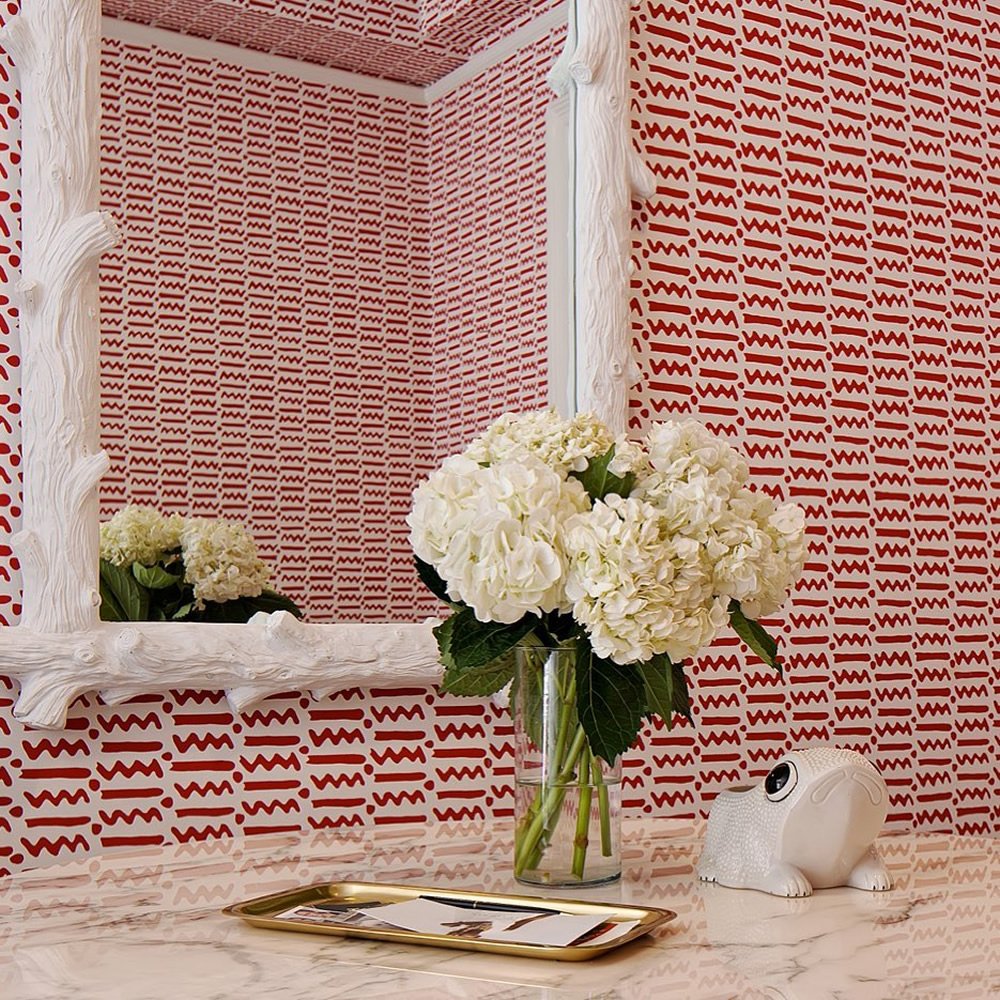
Pattern is one of the most effective ways to add personality to a room, but the size of that pattern can dramatically influence the overall design. Two fabrics may feature the same floral motif or geometric design, yet create completely different impressions simply because the pattern is printed at a different scale.
Understanding pattern scale helps homeowners and interior designers choose fabrics that complement a room's size, furnishings, and overall style. Whether you're selecting upholstery, drapery, wallpaper, or decorative pillows, thoughtful use of pattern scale can make an interior feel balanced, inviting, and professionally designed.
Pattern scale refers to the size of the design elements within a fabric or wallpaper.
For example, a floral print with blossoms measuring several inches across is considered a large-scale pattern, while tiny repeating flowers create a small-scale pattern.
Pattern scale applies to many types of designs, including:
The scale of the pattern affects how it is perceived within a room.
Large-scale patterns naturally draw attention and often become a focal point within an interior.
They work particularly well on:
A bold botanical or oversized floral print can give a room character and create a strong visual impact.
In larger rooms, oversized patterns often feel balanced because they complement the scale of the surrounding furniture and architecture.
Small-scale patterns create texture and movement without dominating the space.
They're commonly used for:
Because the individual design elements are smaller, these patterns often appear more understated from a distance while still adding visual interest.
They can also coordinate easily with larger statement prints.
Medium-scale patterns often provide the best of both worlds.
They introduce character while remaining flexible enough for many different applications.
They're frequently used for:
For homeowners seeking a timeless look, medium-scale patterns often provide lasting appeal.
One of the techniques interior designers use most often is combining multiple pattern scales within the same room.
A balanced fabric scheme might include:
This combination prevents patterns from competing with one another while creating a layered, sophisticated appearance.
If every fabric features a similarly sized pattern, the room can feel busy or visually repetitive.
The size of a room can influence how a pattern is perceived.
Large rooms often have enough visual space to showcase oversized prints without feeling crowded.
Smaller rooms can also benefit from large-scale patterns, especially when used thoughtfully on a feature wall, window treatment, or accent chair. Contrary to popular belief, bold patterns do not always make a room feel smaller.
The key is balancing them with quieter fabrics and allowing the pattern room to stand out.
The size of the furniture should also influence fabric selection.
Large sofas and oversized headboards often provide enough surface area for dramatic patterns to be fully appreciated.
On smaller items, such as decorative pillows or dining chair seats, an oversized pattern may only display part of the design.
When selecting fabric, consider how much of the pattern will actually be visible on the finished piece.
Patterned fabrics become even more effective when paired with solids and subtle textures.
Solid upholstery, woven fabrics, or softly textured linens provide visual breaks that allow larger patterns to stand out.
This balance keeps the room from feeling overwhelming while still creating depth and personality.
Pattern scale and pattern repeat are closely related but not identical.
Pattern scale refers to the size of the design itself, while pattern repeat measures the distance before the design begins again.
Large-scale patterns often have larger repeats, which may require additional fabric for upholstery or custom drapery.
Understanding both concepts helps when planning custom interior projects.
Pattern scale can be difficult to judge from online photographs alone.
A small image may not accurately represent how a design will appear across a full sofa or large curtain panel.
Ordering fabric samples allows you to evaluate:
Viewing samples in the intended room helps ensure the pattern creates the effect you're looking for.
Pattern scale has a powerful influence on the look and feel of an interior. Large-scale designs create bold focal points, medium-scale patterns offer versatility, and smaller prints add subtle detail and texture.
By mixing different pattern sizes, balancing them with solid fabrics, and considering the size of both the room and the furniture, you can create interiors that feel layered, cohesive, and visually engaging.
Thoughtfully selected fabrics help transform a collection of furnishings into a beautifully coordinated space that reflects your personal style while maintaining timeless appeal.