



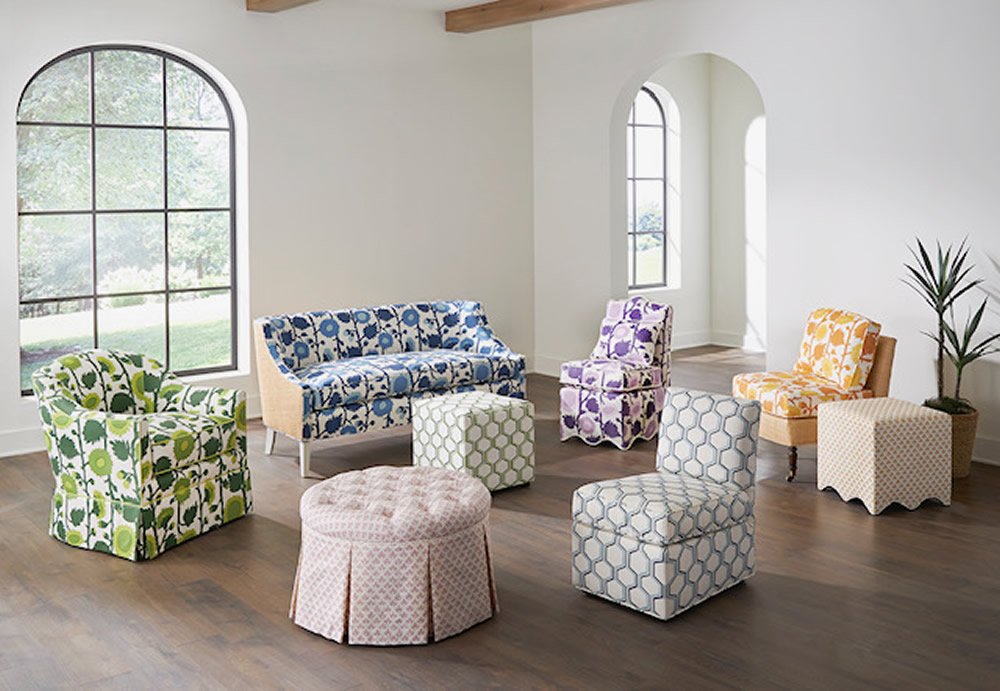
A fabric's appearance is only one part of its story. Before a textile reaches interior designers, upholsterers, or homeowners, it may undergo a variety of evaluations to help ensure it meets quality standards and performs as intended.
Fabric testing plays an important role in the manufacturing process by providing valuable information about a textile's characteristics, consistency, and recommended applications. Understanding what fabric testing involves can help you make more informed decisions when selecting materials for your next interior design project.
Decorative fabrics are used in a wide range of applications, from upholstered furniture and window treatments to bedding and decorative accents.
Because every project has different requirements, manufacturers evaluate fabrics to better understand their properties and ensure consistency throughout production.
Testing also supports quality control by helping manufacturers identify potential issues before fabrics reach customers.
Fabric evaluation often begins long before full-scale production.
During the design and sampling stages, manufacturers review whether the fabric reflects the intended design, construction, and appearance.
Early testing allows adjustments to be made before the fabric becomes part of a production run, helping maintain quality while reducing the likelihood of inconsistencies.
One important aspect of testing involves examining how the fabric has been constructed.
Manufacturers may review characteristics such as:
Understanding these characteristics helps determine which applications may be best suited for a particular fabric.
Color consistency is especially important for decorative fabrics.
When customers order multiple yards, they expect the color to remain as uniform as possible throughout the material.
Manufacturers carefully review printed or woven fabrics to help ensure:
Maintaining color consistency contributes to a polished finished project.
For patterned fabrics, careful evaluation extends beyond color.
Manufacturers also review:
These details help ensure that upholstery, drapery, and other custom applications can be completed with greater precision.
Fabric testing works alongside quality control throughout the manufacturing process.
Regular evaluations help manufacturers monitor production consistency while identifying any variations that may require attention.
This ongoing process helps maintain high standards from one production run to the next.
Fabric testing doesn't simply benefit manufacturers—it also provides valuable information for designers and customers.
Understanding a fabric's characteristics can help interior designers choose textiles that are appropriate for specific projects, whether they're selecting materials for:
Choosing the right fabric for the intended application contributes to both beauty and long-term satisfaction.
One of the greatest benefits of fabric testing is consistency.
Designers and homeowners want confidence that the fabric they receive matches the samples they've selected.
Consistent production and careful evaluation help ensure that colors, textures, patterns, and construction remain as uniform as possible throughout an order.
Testing is just one stage in the journey from concept to finished fabric.
It works alongside thoughtful design, skilled manufacturing, careful finishing, and thorough inspections to create textiles that meet high standards of quality and craftsmanship.
Each step contributes to the final product that arrives ready for installation in homes, hotels, offices, and other beautifully designed spaces.
When selecting decorative fabrics, consider more than color and pattern alone.
Manufacturers that emphasize careful testing and quality control often demonstrate a commitment to producing fabrics that are consistent, reliable, and beautifully crafted.
Reviewing samples and working with trusted manufacturers can help ensure the finished fabric meets your expectations.
Fabric testing is an essential part of creating high-quality decorative textiles. By evaluating construction, color consistency, pattern accuracy, and overall craftsmanship, manufacturers gain valuable insights that help support consistent production and dependable quality.
Although much of this work happens behind the scenes, it plays an important role in ensuring that the finished fabric is ready to perform beautifully in custom upholstery, elegant drapery, decorative accents, and countless other interior design applications. Understanding fabric testing helps highlight the careful attention to detail that goes into every exceptional textile.