



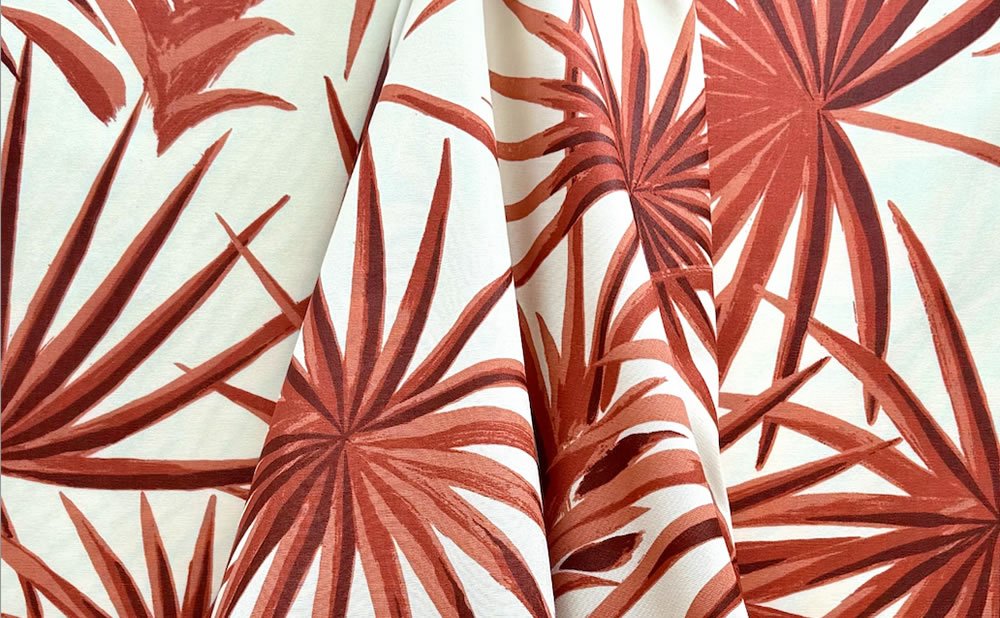
Choosing a beautiful fabric is only part of creating a successful interior. Professional designers also pay close attention to details that many homeowners don't notice at first—one of the most important being fabric repeat.
Pattern repeat influences everything from the amount of fabric you'll need to the way a finished chair, curtain, or headboard looks once it's completed. Understanding this concept can help you communicate more effectively with designers, upholsterers, and workrooms while avoiding surprises during your project.
Here's what every homeowner should know about fabric repeat and why it plays such an important role in interior design.
Fabric repeat is the distance between identical points in a printed or woven pattern before the design begins again.
Imagine a large floral pattern. If one flower appears every 24 inches, the fabric has a 24-inch repeat.
Some fabrics have very small repeats, while others feature dramatic large-scale designs that repeat less frequently.
Although it may seem like a technical detail, fabric repeat affects both the appearance of the finished project and the amount of fabric required.
Pattern repeat is about much more than aesthetics.
Designers use it to ensure patterns are centered, aligned, and balanced across finished pieces.
Without accounting for repeat, a floral motif could be cut awkwardly across the front of a chair or a geometric design might not line up correctly between curtain panels.
Taking repeat into consideration helps create a polished, professional appearance.
It also helps determine the correct amount of fabric to order before production begins.
Vertical repeat measures how far a pattern travels from top to bottom before beginning again.
This measurement is especially important for:
Curtains
Roman shades
Upholstered chair backs
Headboards
Bed skirts
Large vertical repeats often require additional fabric because designers need enough material to position the pattern attractively.
For example, they may want a large floral centered on a headboard rather than cut in half across the top edge.
Horizontal repeat measures the distance before a pattern repeats from side to side.
This becomes important for:
Sofas
Benches
Dining chairs
Window seats
Wide cushion panels
When multiple pieces sit next to each other, designers often align the pattern to create a continuous, intentional appearance.
Proper horizontal alignment contributes to a more refined finished product.
Neither large nor small repeats are inherently better.
They simply create different visual effects.
Large repeats often feature:
Oversized florals
Botanicals
Scenic designs
Tropical prints
Large geometrics
These fabrics create dramatic focal points and work beautifully in larger spaces.
Small repeats typically produce a more subtle appearance.
They're commonly used for:
Textures
Small florals
Tiny geometrics
Classic prints
Coordinate fabrics
Because they repeat more frequently, small patterns often feel quieter and easier to layer with other textiles.
The right choice depends on the scale of the room, the furniture, and your overall design vision.
One of the biggest reasons designers pay attention to fabric repeat is that it influences how much fabric needs to be ordered.
When a pattern must be centered or matched, additional yardage is often required.
For example:
Curtain panels usually require pattern matching from panel to panel.
Upholstery often requires centering the design on cushions or chair backs.
Matching multiple cushions may require extra fabric to align the pattern correctly.
Ordering insufficient fabric can make proper pattern placement impossible.
That's why designers calculate yardage using both the dimensions of the project and the fabric's repeat.
Pattern matching refers to aligning repeating designs so they flow naturally across seams or adjacent pieces.
This is especially important for:
Drapery panels
Upholstered cushions
Long benches
Sofas
Window seats
Well-executed pattern matching may not be immediately noticeable—but it contributes significantly to a room's overall sense of quality.
It's one of the details that distinguishes professionally crafted interiors.
Fabric repeat isn't limited to textiles.
Wallpaper also has pattern repeats, and many designers coordinate wallpaper and fabric by considering both scale and repetition.
For example, a large-scale botanical wallpaper may pair beautifully with a medium-scale geometric fabric and a small-scale stripe.
This combination creates visual balance while preventing patterns from competing with one another.
Some homeowners worry that large repeats will be difficult to decorate with.
In reality, many of the most iconic designer fabrics feature generous pattern repeats.
Large florals, scenic prints, and bold botanicals often become the defining feature of a room.
With thoughtful placement and proper planning, they create elegant, memorable interiors.
The key is allowing enough fabric for proper positioning and balancing the statement pattern with quieter supporting elements.
Viewing a fabric sample helps you evaluate more than just color.
It also reveals:
Pattern scale
Repeat size
Texture
Color relationships
Overall visual impact
A repeat that seems modest online may feel much larger in person—or vice versa.
Seeing samples before ordering allows you to make more confident decisions.
Fabric repeat is one of the reasons interior designers and workrooms bring so much value to a project.
They understand how repeat affects:
Fabric estimates
Pattern placement
Upholstery
Drapery construction
Finished appearance
Their expertise helps ensure the final result looks balanced, polished, and thoughtfully executed.
Fabric repeat may seem like a small technical detail, but it has a major impact on the success of an interior design project. From calculating yardage to centering patterns on upholstery and matching curtain panels, repeat plays an essential role in creating beautiful, professionally finished spaces.
Whether you're selecting fabric for custom drapery, upholstery, or decorative accents, understanding pattern repeat will help you make more informed decisions and appreciate the craftsmanship behind every finished piece.
With the right planning, even the boldest designer fabrics can become timeless additions to your home.