



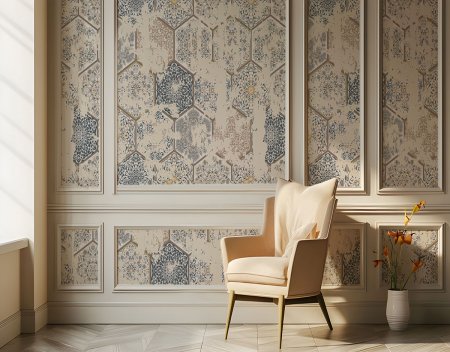
Wallpaper is one of the most powerful ways to add character, color, and texture to a room. Bold patterns, florals, geometrics, and botanical prints can instantly elevate an interior. However, when wallpaper patterns are used too heavily, they can overwhelm a space and make it feel visually cluttered.
The key to great design is balance. By using wallpaper thoughtfully and combining it with other elements in the room, you can create a space that feels stylish, comfortable, and harmonious.
Here’s how to decorate with wallpaper patterns without overusing them.
One of the simplest ways to avoid overusing wallpaper patterns is to apply wallpaper to just one wall.
A statement wall allows the pattern to stand out while the remaining walls provide visual breathing room.
Popular focal wall locations include:
Behind a bed in a bedroom
Behind a sofa in a living room
In a dining room feature wall
Entryway accent walls
Using wallpaper as a focal point keeps the design impactful without overwhelming the room.
When wallpaper contains bold patterns or strong colors, balancing it with neutral furniture and decor helps maintain visual harmony.
Consider pairing patterned wallpaper with:
Neutral upholstery fabrics
Natural wood furniture
Soft linen curtains
Minimal decorative accessories
These simple elements allow the wallpaper to remain the visual highlight while keeping the room calm and inviting.
A common mistake in interior design is combining too many large patterns within the same space.
If your wallpaper already features a bold pattern, try to limit other patterns in the room.
Good design balance often looks like:
Patterned wallpaper
Solid upholstery
Subtle textures instead of additional patterns
If you do mix patterns, choose ones that share a similar color palette and vary in scale.
If you want to layer patterns in a room, using different pattern sizes can help maintain balance.
For example:
Large-scale wallpaper pattern
Medium-scale patterned cushions
Small-scale decorative accents
This variation prevents the room from feeling visually chaotic while still adding interest and depth.
Room size plays an important role in how wallpaper patterns are perceived.
Large, busy patterns covering every wall can make a small room feel crowded. Instead, consider:
A single accent wall
Smaller pattern designs
Lighter colors
Large rooms can handle bolder wallpaper patterns, but balance is still important. Break up the pattern with furniture, artwork, and neutral surfaces.
When wallpaper features an intricate or colorful design, it’s often best to let it take center stage.
Avoid placing too many competing design elements near the wallpaper, such as:
Overly busy artwork
Bold patterned furniture
Too many decorative objects
Instead, keep surrounding decor simple so the wallpaper can shine.
If you want to add depth without overwhelming the room, incorporate texture rather than additional patterns.
Examples include:
Linen upholstery
Woven rugs
Natural wood finishes
Velvet cushions
These textures add visual richness while maintaining a balanced design.
Before committing to wallpaper across multiple walls, it’s always a good idea to test samples.
Viewing the pattern in the room’s lighting conditions helps determine whether it feels balanced or overpowering. Sometimes a design that looks subtle in a sample can feel much stronger when installed on an entire wall.
Testing first allows you to make adjustments before installation.
Wallpaper patterns can bring incredible personality and style to a room, but successful design always comes down to balance. By using wallpaper strategically—whether as an accent wall, paired with neutral furnishings, or combined with subtle textures—you can create a space that feels both visually exciting and comfortably harmonious.
When used thoughtfully, wallpaper enhances a room without overwhelming it, allowing the pattern to add beauty while maintaining a well-balanced interior design.