



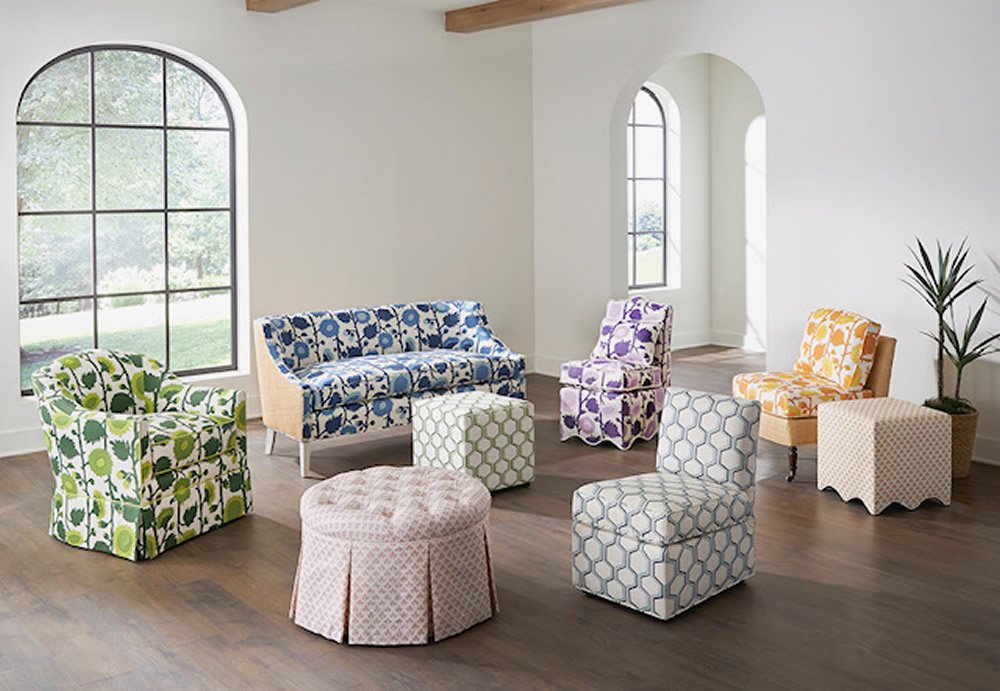
Bold fabric can bring a room to life.
Whether it's a vibrant floral, a dramatic geometric print, a tropical pattern, or a large-scale chinoiserie design, bold fabrics add personality, energy, and visual interest that solid fabrics simply can't achieve.
Yet many homeowners hesitate to use them.
The concern is understandable: Will the room feel too busy? Will the pattern become overwhelming? Will it look dated after a few years?
The good news is that bold fabric doesn't have to dominate a space. Interior designers use strong patterns all the time, creating rooms that feel sophisticated, balanced, and timeless.
Here's how to use bold fabric confidently without overwhelming your room.
One of the easiest ways to incorporate bold fabric is to let it shine on a single focal point.
This might be:
When one element becomes the star of the room, the fabric can make a strong impact without competing with multiple patterns.
This approach is particularly effective for homeowners who are experimenting with bold patterns for the first time.
Professional designers often follow a simple rule: when a pattern gets louder, the surrounding elements become quieter.
If your fabric features a dramatic print, consider pairing it with:
This balance allows the pattern to stand out while keeping the overall room calm and inviting.
Think of bold fabric as artwork. It deserves room to breathe.
A bold pattern often contains several colors.
Rather than introducing entirely new colors throughout the room, pull shades directly from the fabric itself.
For example, if a fabric includes navy, soft green, and ivory, use those colors throughout the space in paint, accessories, rugs, or decorative accents.
This creates visual harmony and helps the pattern feel integrated into the room rather than disconnected from it.
When the color palette remains consistent, even dramatic patterns can feel surprisingly cohesive.
Many people assume smaller patterns are safer than larger ones.
In reality, large-scale patterns often feel cleaner and less cluttered than busy, small-scale prints.
A large botanical, floral, or geometric pattern creates a strong visual statement while allowing the eye to rest between design elements.
Small, densely packed patterns can sometimes create more visual noise than a larger, more open design.
The key is choosing a scale that suits the size of the room and the furniture it's being applied to.
The amount of visual energy a room can comfortably handle depends on how the space is used.
A formal dining room can often support more dramatic fabrics than a bedroom designed for relaxation.
For example:
The function of the room should help guide the intensity of your fabric selections.
Bold fabric doesn't mean you can only use one pattern.
Interior designers frequently layer multiple patterns together. The secret is maintaining variation in scale.
For example:
When every pattern is the same size and visual weight, the room can feel chaotic.
Varying the scale creates contrast and allows each pattern to contribute something different to the design.
A large floral, a medium stripe, and a small geometric print often work beautifully together.
Not every bold fabric needs to cover an entire sofa.
Sometimes a smaller application creates a greater impact.
Consider using bold fabric on:
These smaller moments introduce personality without overwhelming the room.
They're also an excellent way to experiment with patterns before committing to larger projects.
If you're concerned about using a highly colorful pattern, consider balancing it with rich textures.
Natural materials such as linen, grasscloth, wood, rattan, and woven rugs help ground bold fabrics and create a layered, sophisticated appearance.
Texture adds depth without introducing additional visual complexity.
This balance is often what separates professionally designed rooms from spaces that feel overly busy.
One of the most common decorating mistakes is repeating a bold pattern too many times throughout a room.
A fabric that looks stunning on a pair of chairs may lose its impact if it also appears on the curtains, pillows, ottoman, and lampshades.
Instead, allow the pattern to have a clear purpose.
Strategic placement often creates a stronger result than excessive repetition.
When used thoughtfully, bold fabric becomes memorable rather than overwhelming.
Before committing to a large fabric order, always request samples.
A pattern that seems dramatic online may feel surprisingly balanced in person. Likewise, a design that appears subtle on a computer screen may become much bolder when viewed at full scale.
Testing samples in the room allows you to evaluate:
This simple step can make all the difference when selecting statement fabrics.
Bold fabric is one of the most effective ways to add personality and character to a room. When balanced with solid colors, coordinated palettes, thoughtful pattern mixing, and appropriate scale, even dramatic prints can feel elegant and timeless.
The goal isn't to eliminate visual impact—it's to control it.
Whether you're incorporating a vibrant floral, a striking geometric, or a colorful tropical print, bold fabric can transform an ordinary room into a memorable space when used with confidence and intention.
With the right balance, bold doesn't have to mean overwhelming.