



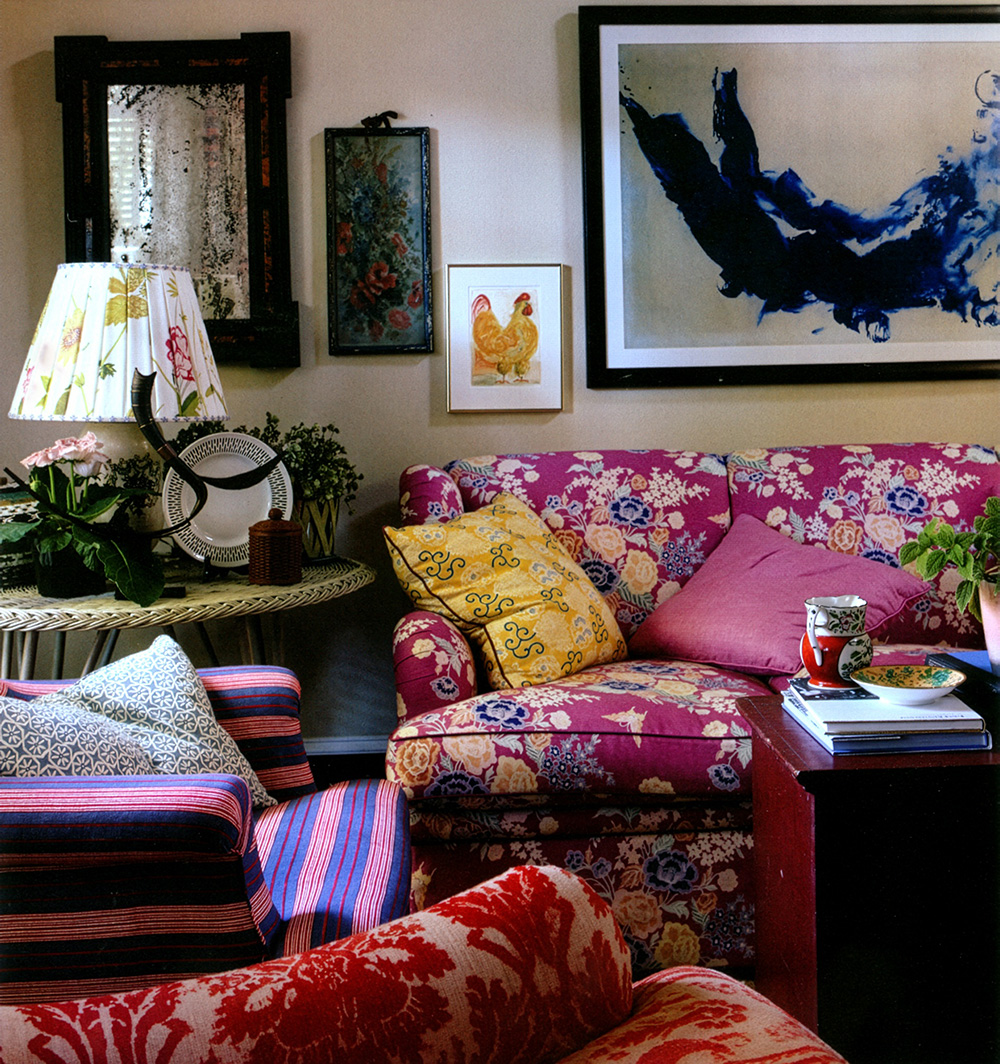
When people admire a beautifully crafted fabric, they often notice its color, texture, or pattern. What many don't realize is that much of a fabric's appearance, feel, and performance is determined after it leaves the loom. This crucial stage of production is known as fabric finishing.
Fabric finishing encompasses a variety of mechanical and chemical processes that enhance a textile's appearance, durability, texture, and functionality. Whether a fabric is destined for luxury upholstery, decorative pillows, drapery, or commercial interiors, the finishing process helps ensure it meets the expectations of designers, manufacturers, and consumers alike.
At Quadrille Fabrics, we understand that exceptional textiles are the result of careful craftsmanship at every stage of manufacturing. Finishing is one of the final—and most important—steps in creating decorative fabrics that are both beautiful and built to perform.
Fabric finishing refers to the treatments applied after weaving or knitting and, in many cases, after dyeing or printing. These processes prepare the textile for its intended application by improving its appearance, texture, stability, or performance.
Depending on the fabric and its end use, finishing may:
Improve softness
Increase durability
Enhance wrinkle resistance
Add stain resistance
Improve dimensional stability
Create a specific texture or visual effect
Increase color vibrancy
Enhance water repellency
Improve flame resistance for qualifying applications
Not every fabric receives the same treatments. Manufacturers carefully select finishing processes based on the fibers used, the desired aesthetic, and the fabric's intended environment.
A woven fabric fresh off the loom is often only the starting point. Without finishing, many textiles would feel stiff, shrink excessively, wrinkle more easily, or fail to meet performance expectations.
Proper finishing can improve:
Comfort
Appearance
Longevity
Ease of maintenance
Consistency
Overall product quality
For decorative fabrics, finishing often creates the luxurious hand feel and refined appearance that distinguish premium textiles.
Mechanical finishing uses physical methods rather than chemical treatments to alter the characteristics of a fabric.
Brushing gently raises fibers from the fabric surface to create a softer texture.
This process is commonly used when manufacturers want to produce fabrics that feel warm, comfortable, and inviting.
Benefits include:
Increased softness
Improved comfort
Enhanced texture
Calendering passes fabric through large heated rollers under controlled pressure.
Depending on the desired effect, calendering can:
Smooth the fabric surface
Increase luster
Create embossed textures
Improve uniformity
Many decorative fabrics receive calendering to achieve a refined, polished appearance.
Shearing trims surface fibers to produce an even finish.
This process is frequently used on fabrics with raised piles or textured surfaces to improve consistency and visual appeal.
Sanforizing is designed to reduce future shrinkage by pre-shrinking the fabric under carefully controlled conditions.
This finishing process helps fabrics maintain their dimensions after cleaning or normal use.
Chemical finishes modify fabric performance through specially formulated treatments.
Softening treatments improve the hand feel of a fabric, making it smoother and more comfortable.
Luxury decorative fabrics often benefit from carefully balanced softening processes that preserve durability while enhancing comfort.
Wrinkle-resistant finishes help fabrics retain a neat appearance by minimizing creasing during everyday use.
These treatments are especially useful in hospitality, commercial, and residential applications where fabrics are expected to maintain a polished look.
Performance fabrics frequently receive stain-resistant treatments that make spills easier to clean before they become permanent.
These finishes can be particularly beneficial in:
Family homes
Hotels
Restaurants
Healthcare settings
Office environments
Stain resistance helps extend the life and appearance of upholstered furniture and other textile products.
Water-repellent finishes encourage liquids to bead on the surface rather than soaking immediately into the fabric.
While not completely waterproof, these finishes can improve everyday protection against accidental spills and moisture.
Certain commercial and hospitality environments require fabrics that meet applicable fire safety standards.
Specialized flame-resistant finishing treatments can help qualifying textiles achieve required performance standards for their intended applications.
Manufacturers carefully select these treatments based on applicable regulations and product requirements.
Beyond traditional mechanical and chemical processes, manufacturers may use specialty finishes to create unique visual or functional characteristics.
Examples include:
Anti-static treatments
UV-resistant finishes
Antimicrobial treatments
Soil-release finishes
Anti-pilling finishes
Fade-resistant enhancements
These specialty treatments allow fabrics to perform well in demanding residential and commercial environments.
One of the most important qualities created during finishing is known as the hand of the fabric.
A fabric's hand refers to how it feels when touched.
Some fabrics are designed to feel:
Crisp
Smooth
Silky
Plush
Firm
Soft
Textured
Achieving the desired hand requires careful control throughout the finishing process.
For interior designers and furniture manufacturers, the tactile experience of a fabric is just as important as its visual appearance.
Modern decorative fabrics are expected to deliver both aesthetics and durability.
An attractive fabric that wears prematurely may not meet customer expectations, while an extremely durable fabric that lacks visual appeal may not fit a designer's vision.
Finishing helps manufacturers achieve an ideal balance by enhancing both the appearance and functional characteristics of a textile.
Every finishing process requires close monitoring to maintain consistency across production.
Quality control teams typically evaluate factors such as:
Color consistency
Surface appearance
Texture
Dimensional stability
Fabric weight
Finish uniformity
Performance characteristics
Careful inspection helps ensure every production run meets established quality standards.
The textile industry continues to develop finishing methods that improve efficiency while reducing environmental impact.
Many manufacturers invest in technologies that aim to:
Reduce water consumption
Improve energy efficiency
Minimize production waste
Optimize chemical usage
Increase manufacturing consistency
As sustainability becomes increasingly important, finishing technologies continue to evolve alongside modern manufacturing practices.
There is no universal finishing process suitable for every fabric.
Instead, manufacturers consider several factors, including:
Fiber composition
Intended use
Desired appearance
Durability requirements
Cleaning expectations
Environmental conditions
For example, a decorative upholstery fabric for a luxury residence may prioritize softness and rich texture, while a commercial seating fabric may emphasize abrasion resistance, stain protection, and ease of maintenance.
Selecting the appropriate finishing process helps ensure the fabric performs as intended throughout its service life.
Fabric finishing requires technical expertise, specialized equipment, and rigorous quality standards. Small adjustments during the finishing stage can significantly influence a textile's appearance, performance, and longevity.
Experienced manufacturers understand how weaving, dyeing, and finishing work together to produce fabrics that consistently meet demanding design and performance expectations.
At Quadrille Fabrics, we design and manufacture decorative fabrics with meticulous attention to every stage of production. From yarn selection through weaving and finishing, our commitment to craftsmanship helps ensure every fabric delivers outstanding quality, lasting performance, and timeless style.
Whether you're specifying textiles for residential interiors, hospitality projects, or commercial applications, our carefully crafted fabric collections are designed to bring your vision to life.
Fabric finishing is one of the most important stages in textile manufacturing. It transforms woven materials into finished fabrics that are softer, stronger, more attractive, and better suited to their intended purpose.
From brushing and calendering to stain-resistant and wrinkle-resistant treatments, each finishing process contributes to the overall quality and performance of a textile. Understanding these techniques allows designers, manufacturers, and consumers to make informed decisions when selecting decorative fabrics.
By partnering with an experienced manufacturer that values precision and quality throughout every stage of production, you can confidently choose fabrics that offer lasting beauty, dependable performance, and exceptional craftsmanship.