



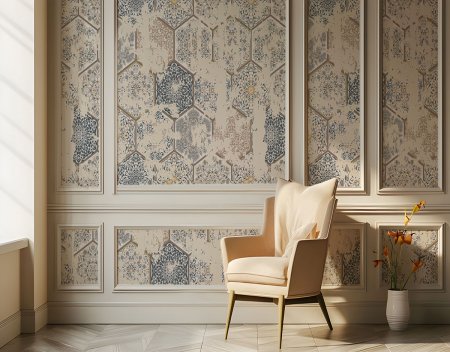
When designing a beautiful interior, your walls provide one of the greatest opportunities to introduce color, texture, and personality. While traditional wallpaper remains a popular choice, fabric wallcoverings have also become a favorite among interior designers seeking warmth and sophistication.
Although these two wall treatments may appear similar at first glance, they offer different visual effects, textures, and design possibilities.
If you're deciding between fabric wallcovering and wallpaper, understanding the strengths of each option can help you choose the best solution for your home.
Wallpaper is a decorative wall covering produced in a wide variety of materials, colors, and patterns.
Today's designer wallpaper collections include everything from timeless florals and elegant chinoiserie to bold geometrics, botanical prints, and textured designs.
Wallpaper is valued for its versatility, allowing homeowners to create virtually any design style, from traditional to contemporary.
Available in countless patterns and colorways, wallpaper offers an easy way to introduce visual interest throughout a home.
A fabric wallcovering uses textile materials to create a decorative wall surface.
Depending on the product, fabric wallcoverings may feature woven fibers, linen, silk-inspired textures, or other textile finishes that add softness and depth to a room.
Unlike traditional wallpaper, which often emphasizes printed pattern, fabric wallcoverings are frequently chosen for their rich texture and tactile quality.
They introduce warmth and dimension while creating an understated sense of luxury.
One of the most noticeable differences between wallpaper and fabric wallcovering is texture.
Wallpaper can be smooth, lightly textured, or heavily embossed depending on the material and manufacturing process.
Fabric wallcoverings, however, typically showcase the natural character of textile fibers, creating visual depth that changes subtly with the light.
If your goal is to add texture and softness, fabric wallcoverings may be especially appealing.
If you're looking for bold patterns or detailed artwork, wallpaper often offers greater variety.
Designer wallpaper is available in an extraordinary range of styles.
Popular options include:
Fabric wallcoverings generally emphasize texture over elaborate printed designs, although some products also feature woven or printed patterns.
The right choice depends on whether you want your walls to make a dramatic statement or provide a more subtle backdrop.
Both materials influence how a room feels.
Wallpaper often introduces personality through color and pattern.
Fabric wallcoverings contribute warmth through texture and softness.
For example:
Neither approach is inherently better—they simply achieve different design goals.
Wallpaper works beautifully throughout the home and is commonly used in:
Its broad selection of styles makes it suitable for virtually any decorating aesthetic.
Fabric wallcoverings are often selected for spaces where texture and refinement take priority.
They are especially popular in:
Their soft, layered appearance creates an inviting atmosphere that feels both comfortable and sophisticated.
Both wallpaper and fabric wallcoverings can be coordinated with upholstery, drapery, bedding, and decorative textiles.
Many interior designers build a complete room around a carefully selected combination of wall treatments and fabrics.
Whether you're choosing a bold wallpaper or a textured fabric wallcovering, coordinating colors and materials helps create a cohesive design that feels intentional rather than overly matched.
Different wallcovering materials have different care requirements.
Some wallpapers are designed for easier cleaning and may be suitable for higher-traffic areas, while certain fabric wallcoverings require gentler care due to their textile surfaces.
Before making a decision, consider the room's purpose, how often it is used, and the manufacturer's care recommendations.
Selecting the appropriate wall treatment for the space will help preserve its appearance over time.
Wallpaper may be the best choice if you want:
Fabric wallcovering may be ideal if you prefer:
In many professionally designed homes, both materials are used in different rooms to achieve a balanced, cohesive aesthetic.
Fabric wallcoverings and wallpaper each bring unique qualities to interior design. Wallpaper offers endless possibilities for pattern, color, and artistic expression, while fabric wallcoverings provide exceptional texture, warmth, and elegance.
The right choice depends on your design goals, the function of the room, and the atmosphere you want to create.
Whether you choose a dramatic designer wallpaper or a beautifully textured fabric wallcovering, investing in high-quality materials can transform your walls into one of the most memorable features of your home.