



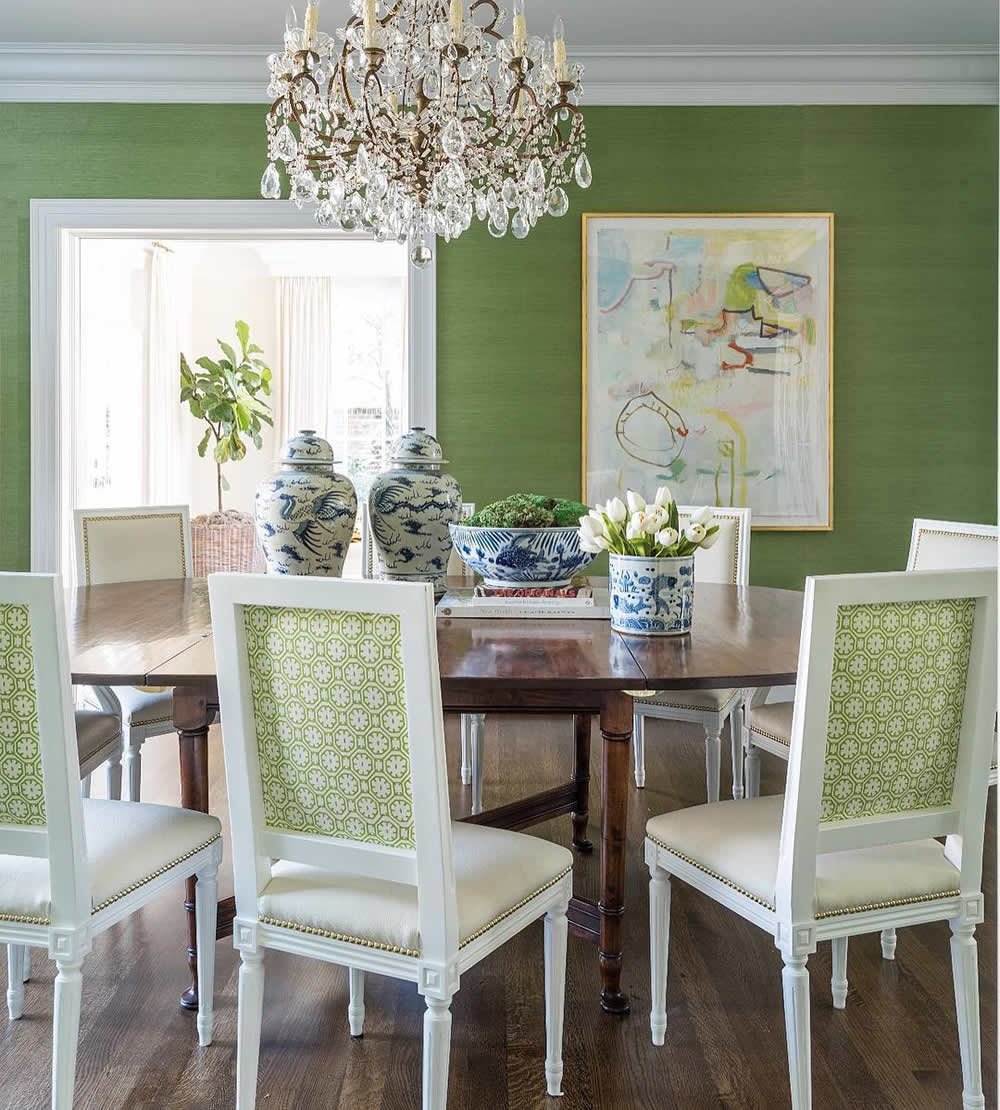
When choosing upholstery fabric, most people focus on visible characteristics like color, pattern, texture, or fiber content. However, one of the most important components of a quality upholstery fabric is something you'll rarely see: the fabric backing.
An upholstery backing plays a critical role in how a fabric performs over time. It can improve stability, enhance durability, simplify manufacturing, and help the finished furniture maintain its appearance through years of everyday use.
At Quadrille Fabrics, we believe that understanding how decorative fabrics are constructed helps designers, furniture manufacturers, and homeowners make more informed decisions. While fabric backing is hidden beneath the surface, it is often an essential part of creating premium upholstery textiles.
An upholstery backing is a material applied to the reverse side of a fabric during manufacturing. Depending on the intended application, the backing may provide additional strength, improve dimensional stability, or support the fabric during upholstery.
Unlike the visible face of the fabric, the backing is generally concealed once the furniture has been upholstered.
The specific type of backing used depends on factors such as:
Fabric construction
Fiber composition
Furniture application
Performance requirements
Manufacturing methods
Desired durability
Not every upholstery fabric requires the same backing, and some fabrics may not require one at all.
Furniture experiences constant stress from sitting, stretching, pulling, and repeated movement.
A properly selected backing can help fabrics withstand these demands while maintaining their appearance.
Benefits of upholstery backings may include:
Improved structural stability
Increased dimensional consistency
Better resistance to stretching
Easier handling during upholstery
Enhanced seam performance
Improved long-term durability
These characteristics contribute to furniture that not only looks attractive but also performs reliably over time.
Decorative fabrics often contain intricate weave constructions that create beautiful textures and patterns.
Adding a backing can help preserve those characteristics by reducing unnecessary movement within the fabric.
For example, backing may help:
Keep woven patterns properly aligned
Minimize distortion during installation
Support complex weave structures
Improve overall fabric stability
The result is furniture that maintains a clean, professional appearance long after installation.
Different furniture applications call for different backing materials. Manufacturers carefully select the backing that best complements the fabric and its intended use.
Some commonly used options include:
Acrylic backings are frequently used to provide additional body and stability while preserving flexibility.
They can help improve:
Fabric handling
Dimensional stability
Upholstery performance
Latex-based backings may be used to reinforce certain woven fabrics and improve structural integrity.
They are often selected when additional support is needed without significantly altering the fabric's appearance.
Some upholstery fabrics receive a knit backing that provides flexibility while adding strength.
These backings can make fabrics easier to work with during furniture manufacturing.
Certain commercial or performance fabrics utilize specialized backing systems designed for demanding environments.
These systems may be selected to support:
Heavy commercial use
Hospitality seating
Healthcare furniture
Office environments
The exact construction varies depending on the intended performance requirements.
Although the terms are sometimes confused, upholstery backing and interlining serve different purposes.
Backing becomes part of the fabric during manufacturing and contributes to the textile's structure.
Interlining is typically an additional material placed between the upholstery fabric and the furniture cushioning during construction to improve comfort, smoothness, or longevity.
Understanding this distinction helps buyers better evaluate upholstery specifications.
Not necessarily.
Many high-quality woven upholstery fabrics possess enough structural integrity to perform well without additional backing.
Whether a backing is appropriate depends on factors including:
Fabric weight
Fiber type
Weave construction
Intended furniture application
Performance expectations
An experienced manufacturer carefully evaluates these factors before determining whether a backing is beneficial.
For furniture manufacturers, backing can improve efficiency throughout the upholstery process.
A stable fabric is often easier to:
Cut accurately
Position correctly
Sew consistently
Stretch evenly
Install smoothly
These advantages can contribute to improved production consistency and higher-quality finished furniture.
Residential furniture and commercial furniture often have different performance requirements.
Commercial seating in hotels, restaurants, offices, and public spaces typically experiences significantly more daily use.
In these applications, manufacturers may prioritize:
Enhanced durability
Improved dimensional stability
Greater seam strength
Long-term performance
Residential furniture may emphasize softness and comfort while still benefiting from carefully selected backing systems when appropriate.
One of the primary goals of upholstery backing is extending the useful life of a fabric.
By helping maintain structural integrity and reducing unnecessary distortion, properly engineered backings can contribute to:
Better appearance retention
Improved furniture longevity
Reduced maintenance
Consistent performance
While backing alone does not determine durability, it can be an important part of an overall high-quality fabric construction.
A beautiful fabric is only part of the equation.
When selecting upholstery fabrics, consider factors such as:
Fiber composition
Weave construction
Abrasion resistance
Colorfastness
Ease of maintenance
Intended application
Overall fabric construction
Looking beyond the surface helps ensure the chosen fabric meets both aesthetic and functional goals.
Creating premium upholstery fabrics requires extensive expertise throughout every stage of production, from yarn selection to weaving, finishing, and backing application.
Experienced manufacturers understand how these individual components work together to create textiles that perform beautifully over time.
Careful engineering behind the scenes often determines how successfully a fabric withstands years of everyday use.
At Quadrille Fabrics, we design and manufacture decorative upholstery fabrics with exceptional attention to quality, craftsmanship, and performance. Every stage of our manufacturing process is guided by a commitment to producing textiles that meet the needs of today's designers, furniture manufacturers, architects, and homeowners.
Whether you're furnishing a private residence, designing a hospitality project, or specifying fabrics for commercial interiors, our collections are crafted to deliver lasting beauty and dependable performance.
Although upholstery backings remain hidden from view, they play an important role in the performance and longevity of many decorative fabrics. By improving stability, supporting fabric construction, and helping furniture maintain its shape and appearance, backing systems contribute to the overall quality of upholstered products.
Understanding upholstery backings allows designers, manufacturers, and consumers to look beyond color and pattern when selecting fabrics. When combined with quality fibers, expert weaving, and thoughtful finishing, the right backing helps create upholstery fabrics that remain beautiful, durable, and comfortable for years to come.