



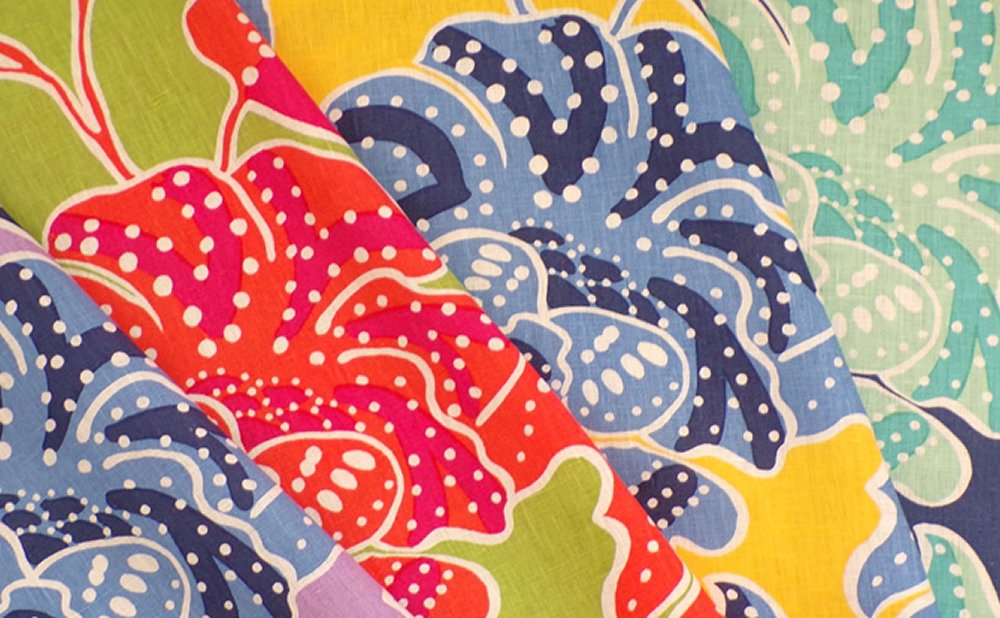
Luxury fabric does more than cover furniture, frame windows, or add decorative accents to a room. The finest fabrics help define a home's character, establish mood, and create the layered, collected look that distinguishes professionally designed interiors from ordinary spaces.
While homeowners often focus on color or pattern when shopping for fabric, interior designers evaluate luxury fabrics through a much broader lens. They consider craftsmanship, texture, scale, versatility, durability, and how a fabric contributes to the overall design story.
So what exactly do designers look for when selecting luxury fabric? Here are the qualities that matter most.
A beautiful pattern is often what initially attracts a designer to a fabric collection.
Luxury fabrics frequently feature distinctive designs that cannot be found in mass-market products. Whether it's a hand-drawn floral, an intricate trellis, a bold geometric, or a timeless chinoiserie motif, exceptional design immediately sets premium fabrics apart.
Designers look for patterns that:
Feel unique and memorable
Have lasting appeal
Work across multiple interior styles
Create visual interest without overwhelming a room
The goal is to select fabrics that will continue to feel beautiful years after installation.
Color is one of the defining characteristics of luxury fabric.
Unlike lower-quality textiles that may appear flat or overly uniform, luxury fabrics often feature depth, subtle variation, and carefully developed color palettes.
Designers appreciate fabrics that:
Contain multiple complementary tones
Respond beautifully to natural light
Coordinate easily with other materials
Add warmth and sophistication to a room
The most successful interiors rarely rely on a single color. Instead, designers create layered palettes that feel nuanced and intentional.
Texture is often what transforms a room from attractive to extraordinary.
Luxury fabrics frequently provide visual and tactile richness that cannot be fully appreciated through photographs alone.
Designers evaluate how a fabric feels, drapes, and interacts with surrounding materials.
Examples include:
Crisp linens
Soft cottons
Textured weaves
Hand-printed fabrics
Layered natural fibers
Texture helps create depth and gives rooms a more collected, sophisticated appearance.
Luxury fabrics are often distinguished by the quality of their production.
Designers pay close attention to:
Printing precision
Color consistency
Fabric construction
Pattern clarity
Material quality
Handcrafted and artisan-produced textiles are particularly valued because they often possess a level of character and authenticity that machine-produced alternatives cannot replicate.
Quality craftsmanship is visible in both the appearance and performance of the finished fabric.
Pattern scale is one of the most important factors designers consider when selecting fabric.
A beautiful pattern can feel completely different depending on the size of the room and the application.
Designers ask questions such as:
Will this pattern work on a large sofa?
Is it suitable for drapery panels?
Will it feel overwhelming in a small room?
Does the scale complement other patterns in the space?
Luxury fabric collections often provide a range of pattern scales, allowing designers to create balanced and visually engaging interiors.
Designers often prefer fabrics that can be used in multiple ways throughout a project.
A successful luxury fabric may work beautifully for:
Upholstery
Curtains
Decorative pillows
Headboards
Ottomans
Banquettes
This versatility allows designers to create continuity while introducing variation through placement and scale.
The ability to use a fabric across multiple applications makes it a valuable design resource.
Professional designers are generally less interested in fleeting trends than they are in enduring design.
While fashionable patterns come and go, luxury fabrics often possess qualities that remain appealing for decades.
Designers frequently gravitate toward fabrics that:
Feel classic yet fresh
Adapt to evolving interiors
Age gracefully
Maintain long-term visual appeal
Timeless fabrics help create homes that feel elegant rather than trendy.
Rarely does a room feature only one fabric.
Interior designers build layered environments by combining multiple textiles, patterns, colors, and textures.
When evaluating luxury fabric, designers consider how it will interact with:
Wallpaper
Upholstery
Drapery fabrics
Rugs
Decorative accessories
The best luxury fabrics play well with others, contributing to a cohesive design story without competing for attention.
Luxury design often emphasizes individuality.
Designers appreciate fabric collections that offer customization options, such as alternative colorways or bespoke color development.
Custom fabrics allow designers to:
Match specific room palettes
Create one-of-a-kind interiors
Coordinate fabrics with architectural features
Differentiate projects from standard installations
Customization is one of the defining advantages of working with premium textile collections.
Many luxury fabric brands are known for a recognizable aesthetic.
Designers often seek collections that possess a clear identity and artistic vision.
Rather than selecting generic fabrics that could come from anywhere, they look for textiles that reflect craftsmanship, creativity, and a distinctive point of view.
This sense of authorship contributes to interiors that feel curated rather than assembled.
While beauty is essential, luxury fabrics must also perform well in real-world environments.
Designers consider:
Intended use
Exposure to sunlight
Household activity levels
Maintenance requirements
Long-term wear characteristics
A fabric selected for decorative drapery may have different performance requirements than one intended for a frequently used sofa.
The most successful choices balance aesthetics with practicality.
Perhaps most importantly, designers evaluate how a fabric contributes to the room as a whole.
Luxury fabric is not selected in isolation.
Instead, designers ask:
What mood does this fabric create?
How does it interact with wallpaper?
Does it support the home's architectural style?
Does it strengthen the overall vision for the space?
Every fabric choice should contribute to a cohesive narrative.
When all elements work together, a room feels intentional, balanced, and beautifully designed.
Luxury fabric is often viewed as an investment because it influences nearly every aspect of a room's appearance.
A thoughtfully selected fabric can:
Elevate ordinary furniture
Add depth and texture
Introduce color and pattern
Create visual continuity
Enhance the perceived quality of a space
For designers, the right fabric is not merely decorative—it is foundational.
When interior designers evaluate luxury fabric, they look beyond simple color and pattern. They consider craftsmanship, texture, scale, versatility, durability, and the fabric's ability to support a broader design vision. The finest luxury fabrics offer a combination of beauty, quality, and timeless appeal that helps create interiors with lasting character.
Whether used for upholstery, drapery, decorative accents, or layered throughout an entire home, luxury fabric remains one of the most important tools designers use to create spaces that feel elegant, personal, and truly memorable.