



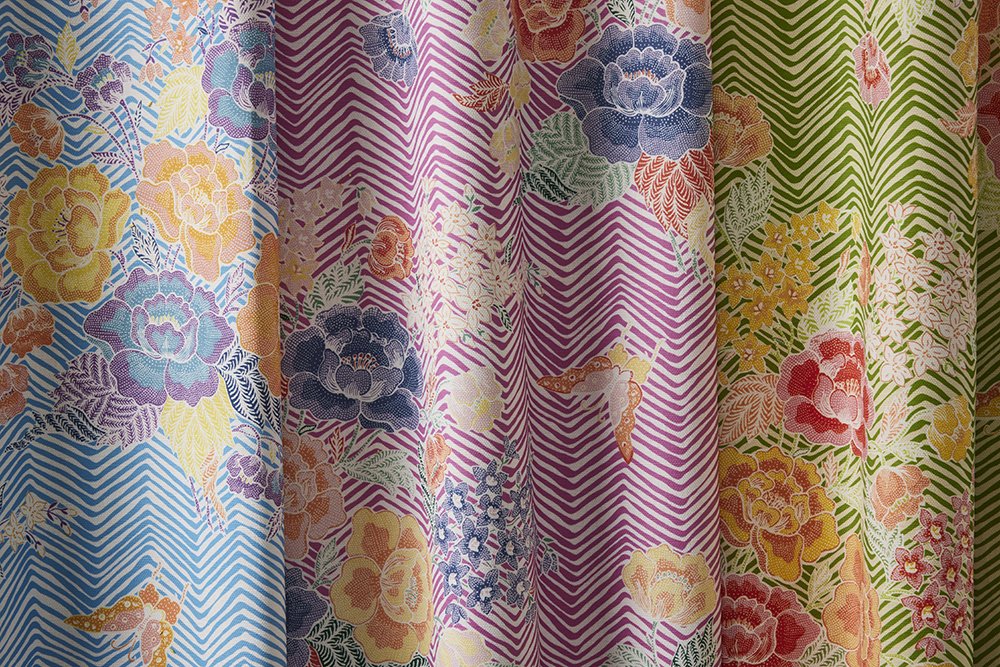
Custom printed fabric gives homeowners and interior designers the ability to create textiles that feel personal, coordinated, and truly tailored to a project. Instead of being limited to standard colorways or off-the-shelf options, custom fabric printing allows a pattern, palette, or design concept to be adapted for a specific room or home.
Whether you are designing custom drapery, upholstery, decorative pillows, bedding accents, or a full interior scheme, custom printed fabric can help bring a design vision to life.
So how does custom printed fabric work? Here is a closer look at the process, from initial concept to finished textile.
Custom printed fabric is fabric produced with a specific pattern, colorway, or design direction chosen for an individual project.
In some cases, customization may involve changing the colors of an existing pattern. In other cases, it may involve printing a design on a different ground cloth or developing a more project-specific look.
Custom printed fabric is often used by interior designers who need textiles to coordinate with wallpaper, paint colors, rugs, furniture, or architectural details.
The result is fabric that feels intentional, cohesive, and unique to the space.
Standard fabric collections offer many beautiful options, but not every project fits neatly into an existing colorway.
A designer may love a pattern but need it in softer colors. A homeowner may want fabric that coordinates with a particular wallpaper. A room may require a very specific shade of blue, green, coral, or neutral to complete the palette.
Custom printed fabric provides flexibility.
It allows you to preserve the beauty of a pattern while adapting it to the needs of the room.
Common reasons to choose custom printed fabric include:
Matching a specific design palette
Coordinating with wallpaper
Complementing existing furnishings
Creating a one-of-a-kind interior
Adjusting color intensity
Developing a softer or bolder version of a pattern
Creating continuity throughout a home
Most custom printed fabric projects begin with a pattern.
This might be a floral, botanical, geometric, stripe, chinoiserie, tropical print, or another decorative motif.
The designer or homeowner may choose an existing pattern and then request changes to the colors or fabric ground.
For example, a vibrant blue-and-green print could be reimagined in pale blue and ivory for a bedroom. A bold tropical pattern could be softened into a more neutral palette for a sitting room. A traditional floral could be customized to coordinate with a specific wallpaper or rug.
The pattern provides the foundation. The customization makes it specific to the project.
The ground cloth is the base fabric on which the design is printed.
Common ground cloths may include cotton, linen, linen-cotton blends, or other textile bases depending on the manufacturer and intended use.
The ground cloth affects the finished fabric’s:
Texture
Weight
Drape
Durability
Color appearance
Overall feel
A pattern printed on crisp cotton may look different from the same pattern printed on a linen blend. That is why ground cloth selection is an important part of the custom fabric printing process.
The intended use also matters. Drapery, upholstery, pillows, and bedding accents may each call for different fabric qualities.
Color is one of the most important parts of custom printed fabric.
Designers often begin with a palette inspired by the room. This may include paint colors, wallpaper, rugs, upholstery, flooring, and decorative accents.
From there, the fabric colors can be adjusted to support the overall design.
Custom color development may involve:
Softening bright colors
Deepening pale tones
Replacing one color with another
Creating more contrast
Reducing contrast
Matching or coordinating with other materials
The goal is not always an exact match. In many cases, the most elegant interiors use colors that coordinate rather than match perfectly.
Custom printed fabric is especially useful when a room includes wallpaper.
A designer may want curtains, pillows, upholstery, or bedding that relates to the wallpaper without feeling overly matched.
Custom fabric printing allows colors from the wallpaper to be echoed in the fabric, creating a cohesive design story.
For example, a wallpaper with soft green leaves and ivory details might inspire a custom fabric with coordinating green tones. A blue-and-white wallcovering might be paired with a custom fabric that introduces a slightly deeper navy for contrast.
When done well, the room feels layered and polished.
Before committing to a full order, samples are essential.
A sample allows the designer or homeowner to review the custom printed fabric in person and evaluate how it works in the actual space.
Samples help confirm:
Color accuracy
Pattern scale
Fabric texture
Print quality
Coordination with other materials
Appearance in natural and artificial light
Fabric can look very different online than it does in a room. Natural light, lamp light, paint colors, flooring, and nearby furnishings can all affect how colors appear.
Reviewing samples helps prevent surprises and gives everyone more confidence before production.
Once the sample has been reviewed, adjustments may be made before final approval.
The colors may need to be softened, warmed, cooled, brightened, or deepened. The designer may compare the sample against wallpaper, paint, trim, or upholstery before approving the final version.
This approval stage is an important part of the custom process.
It ensures the finished fabric supports the room’s overall design vision before the full yardage is produced.
After approval, the fabric is printed according to the finalized specifications.
Depending on the manufacturer, printing may involve hand screen-printing, digital printing, or another specialized process.
Hand screen-printing is often valued for its craftsmanship, depth, and subtle variation. Digital printing can allow for detailed imagery and flexible production depending on the project.
Each method has its own advantages. The best choice depends on the design, material, desired finish, and manufacturer’s capabilities.
With certain printing methods, especially hand printing, subtle variation is part of the beauty of the finished fabric.
Small differences in color density, texture, or print character can give the fabric warmth and authenticity.
These variations are not necessarily flaws. They are often part of what makes custom printed fabric feel special and crafted rather than mass-produced.
For many designers, this character is one of the reasons custom printed textiles are so appealing.
Custom printed fabric can be used in many ways throughout an interior.
Popular applications include:
Custom curtains
Roman shades
Upholstered chairs
Headboards
Decorative pillows
Window seats
Benches
Ottomans
Bedding accents
Dining chair seats
Because the fabric is tailored to the project, it can help connect different elements of the room and create a more refined, designer-level result.
Custom printed fabric is not limited to a single room.
Interior designers often use custom fabrics to create continuity throughout an entire home.
A pattern may appear in one colorway in a bedroom, a slightly different colorway in a sitting room, and a coordinating version in a guest room.
This approach allows each room to feel unique while still belonging to the same overall design story.
Custom fabric printing can be especially helpful in large homes, boutique hospitality projects, and interiors where every detail needs to feel carefully considered.
Custom printed fabric may be a good choice if you:
Love a pattern but need different colors
Want fabric to coordinate with wallpaper
Have a specific interior palette
Are working with existing furnishings
Want a more personalized design
Need fabric for a high-end or custom interior
Are creating a whole-home fabric scheme
Standard fabrics are still a beautiful option for many projects. But when a space calls for something more specific, custom printed fabric offers a level of flexibility that can make the finished room feel truly complete.
Custom printed fabric allows designers and homeowners to create textiles that are tailored to a specific room, palette, and design vision. From selecting a pattern and choosing a ground cloth to developing colors and reviewing samples, each step helps ensure the finished fabric feels intentional and beautifully coordinated.
Whether used for drapery, upholstery, pillows, or an entire home scheme, custom printed fabric brings personality, craftsmanship, and flexibility to interior design.
For anyone seeking a fabric that feels distinctive rather than ordinary, custom printing offers a thoughtful way to create something truly special.