



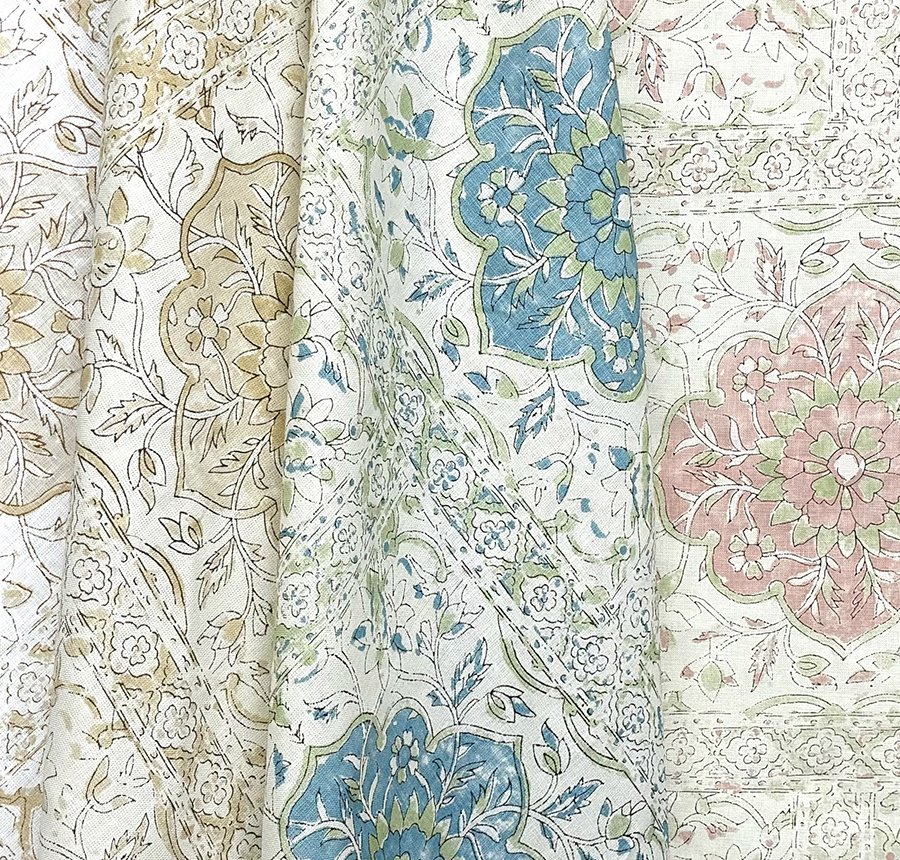
Behind many beautifully designed interiors is a close working relationship between an interior designer and a fabric house.
Fabric houses give designers access to textiles that can help define a room through color, pattern, texture, and material. But the relationship involves much more than simply selecting attractive fabric. Designers may rely on fabric houses for samples, specifications, product knowledge, availability information, and assistance finding the right textile for a particular application.
Understanding how fabric houses work with interior designers offers a useful glimpse into the professional side of textile sourcing and interior design.
A fabric house is a company that designs, manufactures, represents, or distributes textiles for interior design and related applications.
Depending on the company, its collections may include fabrics for:
Upholstery
Curtains and drapery
Decorative pillows
Roman shades and other window treatments
Upholstered walls and headboards
Indoor and outdoor applications
Coordinating wallpaper
Some fabric houses develop distinctive collections around particular approaches to color and pattern, giving designers recognizable aesthetics to incorporate into their projects.
Interior designers rarely select textiles based on appearance alone.
A fabric may be beautiful but inappropriate for the intended application. Designers need to consider material composition, width, pattern repeat, direction, scale, color, durability, and other specifications.
Fabric houses provide the product information that helps designers make these decisions.
They can also give designers access to extensive collections of coordinating textiles, making it easier to build a complete fabric scheme rather than selecting each material independently.
Samples are an important part of the relationship between fabric houses and interior designers.
Even excellent photography cannot communicate every characteristic of a textile. Designers often need to see and touch the material before specifying it for a project.
A physical sample allows the designer to evaluate characteristics such as texture, weight, scale, and color.
It can also be taken directly into the project space.
This is particularly important for color. Natural light, artificial lighting, wall colors, flooring, and nearby furniture can all influence how a fabric appears.
By comparing samples in the actual environment, designers can make more confident decisions.
Professional designers frequently work with several fabrics within the same room.
For example, a living room might include patterned curtains, upholstered chairs, a sofa, decorative cushions, and a window seat. Each textile needs its own identity while still contributing to a cohesive interior.
A designer might begin with a bold hero fabric and build the rest of the room around it.
A large botanical or geometric print, for instance, could establish the main palette. Smaller patterns, stripes, textures, and quieter fabrics can then complement it.
Fabric houses with collections spanning multiple patterns, scales, and colorways give designers considerable freedom to create these layered combinations.
The technical information supplied by a fabric house can be just as important as the design itself.
Depending on the textile, designers may need to consider:
Fabric width: The usable width of the material can influence yardage calculations and fabrication.
Pattern repeat: Large repeats may require additional material for pattern matching.
Fabric direction: Directional patterns need to be positioned correctly when cut.
Composition: Linen, cotton, blends, and other materials have different characteristics.
Colorway: A single pattern may be available in several different color combinations.
These specifications help designers determine whether a fabric will work for the intended project before an order is placed.
One of the advantages of working with a professional fabric house is access to textiles that help make an interior feel distinctive.
Instead of designing a room around a small selection of mass-market materials, designers can explore extensive collections of colors and patterns.
This is especially valuable in custom interiors, where the goal is often to create a space that reflects the client's personality rather than reproduce a standardized aesthetic.
An unusual pattern on an accent chair, a striking pair of curtains, or an unexpected combination of fabrics can give a room an identity of its own.
Depending on the fabric house, interior designers may also work with showrooms or sales representatives.
These professionals can help designers navigate large collections, locate particular colors or patterns, understand product specifications, and identify alternatives.
A designer searching for a blue botanical print for curtains, for example, may discover several possibilities with different scales, materials, grounds, and shades of blue.
This type of product knowledge can make textile sourcing much more efficient.
Once a designer selects a fabric, the project moves from creative selection into execution.
The textile may be sent to an upholsterer, curtain maker, seamstress, or professional workroom to become the finished piece.
At this stage, accurate specifications become especially important.
Pattern direction, repeat, width, motif placement, and required yardage can all affect fabrication.
For complicated projects—particularly those involving large-scale or directional patterns—designers may consult the workroom before finalizing the fabric quantity.
Careful coordination between the designer, fabric supplier, and fabricator helps ensure that the original design vision carries through to the finished interior.
Fabric houses and interior designers ultimately share a common goal: turning textiles into spaces that feel thoughtful, beautiful, and individual.
The fabric house develops and supplies the textile. The designer determines how that textile can contribute to a larger interior. Skilled workrooms and craftspeople then transform the material into curtains, furniture, cushions, and other finished pieces.
When these elements work together, fabric becomes much more than a surface covering.
It becomes part of the architecture and personality of the room.
At Quadrille Fabrics, distinctive color and pattern have long been central to our approach to textile design.
Our collections give interior designers opportunities to explore fabrics across different patterns, scales, materials, and colorways for a wide variety of interior applications.
Whether a textile becomes a dramatic upholstered chair, a pair of patterned curtains, decorative cushions, or part of a layered room filled with complementary designs, the relationship between fabric houses and interior designers helps turn creative ideas into finished spaces.
For designers, discovering the right fabric is often one of the most exciting parts of that process.