



Choosing the right fabric involves more than finding the perfect color, pattern, and material. Before fabric is cut for upholstery, curtains, cushions, or another interior application, there is another important characteristic to consider: fabric direction.
Fabric direction describes the way a textile's pattern, weave, texture, or surface is intended to run. While direction may seem like a minor technical detail, it can have a significant effect on how a finished piece looks, how much fabric a project requires, and how individual sections of fabric align with one another.
Understanding fabric direction is particularly important when working with patterned fabrics, upholstery fabrics, directional prints, and fabrics with a visible nap.
Here is what fabric direction means, how to identify it, and why it matters in interior design.
Fabric direction refers to the orientation in which a fabric's design, texture, weave, or surface runs.
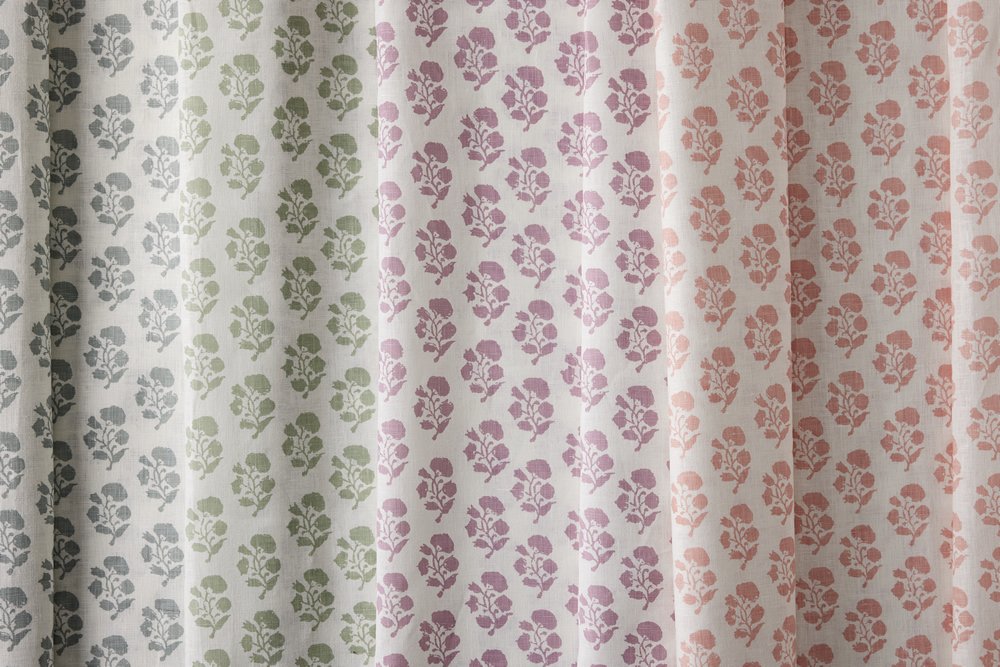
Some fabrics have an obvious direction. A botanical print featuring flowers growing upward, for example, will usually have a clearly identifiable top and bottom.
Other fabrics are less obvious. A geometric pattern may look almost identical when viewed from different directions, while a solid-colored fabric may appear completely non-directional at first glance.
Direction can be influenced by several characteristics, including:
The orientation of a printed or woven pattern
The grain of the fabric
The direction of stripes
The nap or pile of the textile
The orientation of recognizable motifs
The way light interacts with the fabric's surface
Understanding these characteristics before cutting fabric helps ensure that the finished project looks intentional and consistent.
A directional fabric has a design or surface that is intended to face or run in a particular direction.
Imagine a fabric printed with trees. If every tree grows from the same side of the fabric toward the other, turning one section upside down would make those trees appear inverted.
That is an obvious directional pattern.
However, directional fabrics are not limited to recognizable images.
Stripes, geometric patterns, abstract designs, damasks, florals, and textured fabrics can all have a direction.
Velvet and other pile fabrics also require careful attention to direction because their appearance can change depending on which way the nap runs.
The distinction between directional and non-directional fabric becomes particularly important when planning how pieces will be cut.
Directional fabrics must generally be positioned consistently so that their motifs or surface characteristics run in the intended direction.
A non-directional pattern can often be rotated without creating an obvious visual difference.
For example, a scattered abstract print may look essentially the same when rotated 180 degrees. A print featuring birds all flying upward would not.
Non-directional fabrics can sometimes provide greater flexibility when creating cutting layouts, potentially reducing waste.
Directional fabrics may require additional yardage because pieces cannot simply be rotated to fit unused areas of the fabric.
Pattern direction is sometimes described as one-way or two-way.
A one-way pattern has a clearly identifiable orientation.
Flowers growing from stems, animals facing the same direction, vertically arranged botanical motifs, or objects with an obvious top and bottom are common examples.
When using a one-way fabric, each cut section generally needs to maintain the same orientation.
Otherwise, part of a sofa, chair, curtain, or cushion could appear upside down.
Some patterns are designed so that they can be viewed from more than one direction without appearing incorrect.
These designs can offer greater flexibility during fabrication.
However, even when a print appears non-directional, it is still worth studying the full pattern repeat before cutting. Subtle directional characteristics may become much more obvious when several yards of fabric are viewed together.
Fabric direction affects both the appearance and construction of a finished project.
Incorrectly oriented fabric may create mismatched patterns, inconsistent shading, upside-down motifs, or noticeable differences between adjacent pieces.
In some applications, the mistake may be immediately obvious.
Imagine a pair of dining chairs upholstered in the same botanical fabric. On one chair, the flowers grow upward. On the other, they point toward the floor.
Even if the upholstery itself is beautifully executed, the inconsistency can make the finished set appear incorrect.
This is why fabric direction should be determined before measuring, cutting, or installing the textile.
Direction is particularly important when choosing and cutting upholstery fabric.
A chair, sofa, ottoman, or upholstered headboard may require numerous separate fabric pieces. Those sections ultimately come together to create one finished object.
When using a directional pattern, the upholsterer must consider how each piece relates to the others.
For example, a floral motif on the seat of a chair should normally appear intentionally oriented relative to the pattern on the chair back.
Direction can also affect pattern placement.
With a statement print, a designer may want a particular flower, medallion, geometric element, or other motif centered on the back of a chair. The surrounding upholstery pieces can then be positioned to create a balanced composition.
The fabric is not simply covering the furniture. Its direction becomes part of the furniture's design.
Fabric direction is equally important for curtains and drapery.
Curtains display large sections of fabric vertically, making directional patterns particularly noticeable.
A botanical or floral design may have a clear upward orientation. If one curtain panel is cut differently from another, the discrepancy may be easy to see when the panels hang side by side.
Pattern matching can also become important when creating multiple curtain panels.
The goal may be to make the pattern appear visually continuous or at least balanced across the window treatment.
Careful planning of both direction and pattern repeat helps produce a professional finished appearance.
Throw pillows and cushions may be relatively small, but direction still matters.
If several cushions are being created from the same directional fabric, maintaining a consistent orientation can make the collection feel cohesive.
Pattern placement is another consideration.
A large-scale print may contain several distinctive motifs within one repeat. Thoughtfully positioning those elements can produce far more attractive cushions than simply cutting whichever portion of fabric happens to fit.
This is particularly important with bold designer fabrics where the pattern itself is meant to be noticed.
Fabric direction and pattern repeat are closely related, but they are not the same thing.
Fabric direction describes the orientation of the textile or design.
Pattern repeat describes the distance before a printed or woven design begins repeating itself.
Both characteristics need to be considered when calculating fabric requirements.
Suppose an upholstery project requires several identical panels. If the fabric has a large directional repeat, additional material may be necessary to ensure that every panel is oriented correctly and that important parts of the pattern appear in the desired locations.
Ignoring either direction or repeat can lead to insufficient yardage.
Yes.
A directional fabric may require more yardage than a non-directional fabric for the same project.
When cutting non-directional fabric, a workroom may sometimes rotate pattern pieces to use the available material efficiently.
With a one-way directional fabric, rotating a piece 180 degrees may make the design appear upside down. That limits how the cutting layout can be arranged.
Pattern matching can require even more material.
If multiple chair backs, curtain panels, or cushions need to begin at approximately the same point in a large pattern repeat, portions of fabric may need to be skipped between cuts.
For this reason, fabric direction and repeat should be considered when estimating yardage rather than after the fabric has already been ordered.
Direction does not only apply to printed patterns.
Some fabrics have a nap, meaning the fibers on the surface naturally lie in a particular direction.
Velvet is a classic example.
Run your hand across velvet in one direction and then the other, and you may notice that its appearance changes. Depending on the orientation of the pile and the way light hits it, the fabric can appear lighter, darker, shinier, or richer.
If separate upholstery pieces are installed with their nap running in different directions, they can appear to be different shades even though they came from the same fabric.
This is why fabrics with nap are normally cut with careful attention to consistent direction.
Yes.
A fabric does not need a printed pattern to be directional.
Velvet, corduroy, chenille, and other textured textiles may have a noticeable nap or surface direction.
Certain woven fabrics can also have subtle directional characteristics.
These differences may be difficult to see when examining a small sample but become much more noticeable once several pieces are placed together on a large piece of furniture.
For this reason, it is wise to evaluate both the front and surface characteristics of a fabric before assuming it can be cut in any direction.
Another term commonly encountered when discussing fabric direction is railroaded fabric.
Most upholstery and drapery fabrics have a conventional orientation relative to the width of the roll. A railroaded pattern is designed so that its orientation runs differently across that width.
This can be particularly useful for certain upholstery applications because it may allow fabric to run continuously across a wide piece of furniture without creating as many seams.
Whether railroaded fabric is appropriate depends on the design, fabric width, furniture dimensions, and intended application.
It is therefore important to understand how the pattern runs across the roll before ordering or cutting the material.
With strongly directional patterns, the answer may be immediately apparent.
Look for recognizable elements such as:
Flowers and stems
Trees and leaves
Animals
People
Architectural elements
Objects with a clear top and bottom
Repeating geometric motifs
Stripes or lines
Changes in texture or pile
For more abstract patterns, examine a larger section of the fabric rather than relying solely on a small swatch.
A pattern that appears random within a few inches may reveal a clear direction when viewed across an entire repeat.
When working with velvet or another pile fabric, examine it from different directions and under different lighting conditions.
There is no single rule for every textile and piece of furniture.
The correct orientation depends on the fabric design and intended visual effect.
However, recognizable motifs should generally appear upright when the furniture is viewed normally.
The direction should also remain consistent between related sections unless the design deliberately calls for something different.
For large-scale patterns, motif placement becomes especially important. Centering a major design element on a chair back or cushion can make the finished piece appear balanced and carefully considered.
Professional upholsterers and workrooms can help determine the most effective layout for complex patterns.
Not necessarily.
Consistent direction does not mean that every object must feature an identical section of the pattern.
For example, six dining chairs can all have their fabric running in the same direction without having exactly the same flower centered on every chair.
However, matching motif placement can create a particularly polished appearance when symmetry is important.
The decision depends on the pattern, the furniture, available yardage, and desired result.
Ideally, fabric direction should be considered before calculating final yardage.
Before ordering fabric for upholstery, curtains, cushions, or another application, determine:
Whether the pattern is directional
Whether the textile has a nap
How the design runs relative to the fabric width
The horizontal and vertical pattern repeat
Whether motifs need to be matched or centered
Whether the fabric will be used conventionally or railroaded
These details can significantly influence the amount of material required.
When in doubt, consulting the upholsterer, designer, curtain workroom, or other professional completing the project before ordering can prevent expensive mistakes.
Beautiful interiors often depend on details that are easy to overlook.
Fabric direction is one of them.
Correct direction helps patterns flow naturally, keeps motifs upright, creates consistency between separate pieces, and ensures that textured fabrics interact with light in the intended way.
It also plays an important practical role in calculating yardage and reducing mistakes during fabrication.
Whether you are upholstering a statement chair, creating custom curtains, making decorative cushions, or designing an entire room around patterned textiles, understanding fabric direction allows you to make more informed decisions before the first cut is made.
At Quadrille Fabrics, pattern, color, scale, and craftsmanship come together to create distinctive textiles for interior design.
When exploring fabric for upholstery, curtains, window treatments, cushions, and other applications, consider not only the colors and motifs that catch your eye but also how the pattern is designed to run.
Understanding fabric direction, pattern repeat, scale, and placement can help transform a beautiful textile into a beautifully executed finished interior.